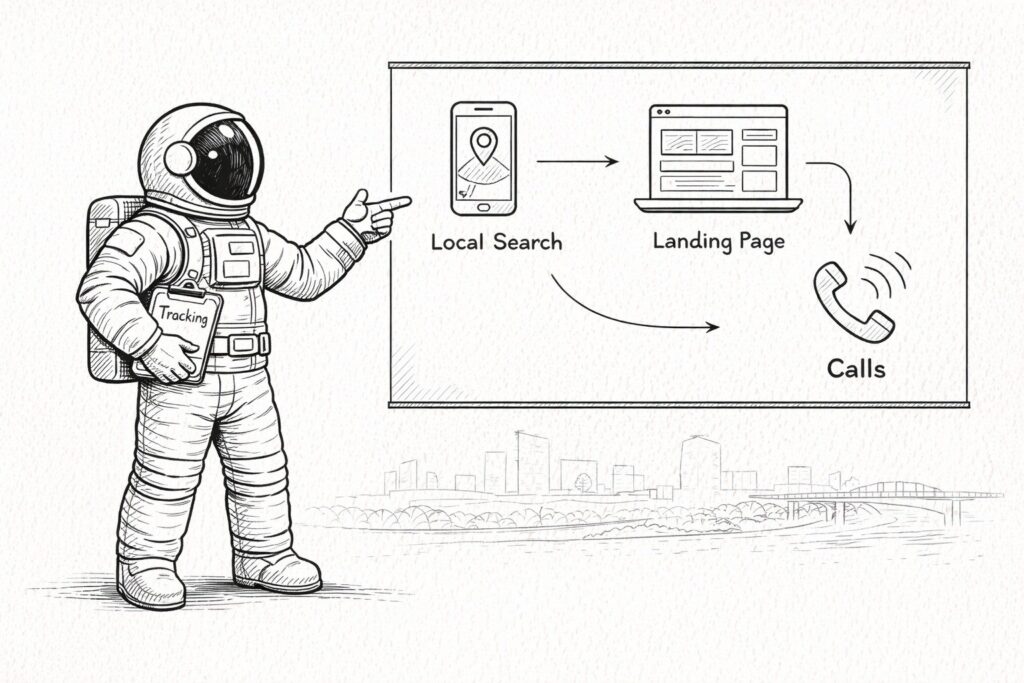
Funnel landing pages are web pages built for one search intent and one next step. They match a specific service and a specific location, so the visitor sees the same topic they searched for, then gets a clear way to act. That next step can be a call, a short form, or a booking request. This setup improves conversions because it removes extra choices and sends people to the page that fits their situation.
If you serve multiple locations or multiple services, you usually need multiple funnel landing pages. A person searching for a service in a city wants details that prove you serve that area and that exact need.
If the the phone still feels quieter than it should, consider a common reason businesses miss conversions: people click with one goal in mind, then land on a page that makes them hunt for it. A funnel landing page fixes that by matching the exact search, guiding the next step, and keeping the ask small enough that real people actually do it.
Key Takeaways:
- A funnel landing page works best as a set of focused sales pages, not a single catch-all page.
- Location pages convert better when they match local intent and show local proof and details.
- Service pages convert better when they answer one problem and one next step.
- More landing pages usually means more chances to match the right search and improve conversions.
- Speed matters because many mobile visits end fast when pages load slowly.
- Benchmarks help you spot weak pages and fix them with testing.
Do You Really Need Multiple Funnel Landing Pages?
You need multiple landing pages when you want more of your traffic to turn into calls and form fills. Each page gives you one more chance to match a real search and keep the path simple. HubSpot reports that sites with 10 to 15 landing pages tend to see about a 55% lift in conversions compared with sites with fewer than 10. They also report higher lifts at larger page counts.
That matters for local SEO because “near me” searches are narrow. People do not want a general page. They want the page that matches their exact problem, in their exact area. For example, “Landing Page Builder in Little Rock,” “Best Landing Page Designer Near Me,” or “Little Rock Landing Page Designer.”
Why Does a Single Page Often Lose the Lead?
People who search nearby often act fast. Your page has to act fast, too.
Most visitors land on these pages from a phone. If the page feels slow or cluttered, the click ends fast. Google has reported that 53% of mobile visits get abandoned if a page takes longer than 3 seconds to load. Even once the page has loaded, overwhelming the visitor with options makes them likely to click away, too.
Converting clicks means making sure the exact information visitors are searching for appears first. This is where funnel landing pages come in.
The Real Difference Between a Funnel and a One-Page Setup
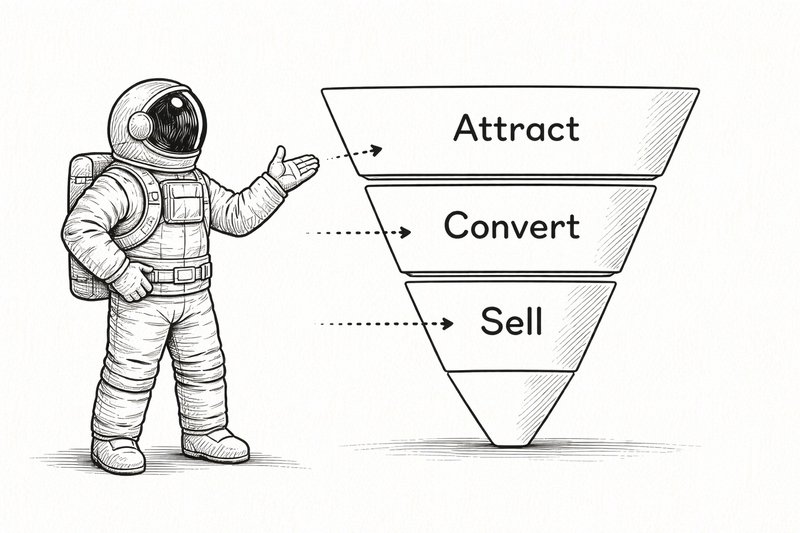
A sales funnel setup spreads the work across steps. Each step reduces friction in the customer journey.
On the other hand, a one-page setup tries to do everything at once. That can work when the offer is simple and the buyer feels ready.
Use a funnel style setup when:
- The service involves trust, pain, or a bigger decision.
- The visitor needs proof before they give you a phone number.
- You serve more than one city or neighborhood.
- You offer multiple services with very different intent.
Funnel Landing Pages in Stages
| Funnel Stage | What the Visitor Wants Right Now | Best Page Type | Best Next Step | What to Measure |
|---|---|---|---|---|
| Awareness | “Is this my problem, and can you help?” | Educational landing page or quiz start | Short quiz, checklist download, or “see options” click | Scroll depth, quiz starts, button clicks |
| Consideration | “Why you, and what is the plan?” | Service landing page with proof | Schedule request, call tap, or form start | Form starts, call clicks, time on page |
| Action | “Make this easy so I can book.” | Booking-focused landing page | Call, schedule form, or text request | Completed forms, calls, booked appointments |
Why Do Location Pages Matter for Conversions?
A location page works because it lines up with how people search.
Local searches carry urgency. Many different types of people who search nearby visit a business soon after. That means your page needs to answer local questions without forcing extra clicks.
A strong location page usually includes:
- The city name in the headline and the first paragraph.
- A short list of the top services people look for in that area.
- Address, hours, and a map.
- Real reviews that mention the area.
- A clear “call” and “schedule” option near the top.
- A video tour, if possible.
You should build multiple location pages to cover all the areas you serve. More targeted landing pages often leads to more conversions and leads because you match more searches with the right page.
Why Service-Specific Funnel Landing Pages Matter Even More
Service pages work when they stop trying to speak to everyone.
A “Dentistry” page is vague. A “Tooth pain and same day relief” page is clear. Clear wins. A service page should do three things quickly:
- Name the problem in plain language.
- Explain what happens next, step by step.
- Prove you have done this before.
One extra note: long forms scare people off. If you need a lot of details, split the form into steps. Multi step forms often lift conversions in testing because they feel easier to finish.
Where Do Squeeze Pages Fit?
A squeeze page collects one thing, usually an email or phone number, in exchange for something small. It works best when the visitor is early in the decision and not ready to book.
Good uses for a squeeze page include:
- Downloading a checklist.
- Getting a pricing range guide.
- Taking a quick fit quiz.
Bad uses include:
- Emergency services.
- High urgency care.
- “Call now” problems.
What Actually Moves Conversion Rate On Funnel Landing Pages?
Benchmarks help, but page basics are necessary to improve conversion.
Landing page conversion rates vary by industry, and benchmarks give you a reality check on whether a page is underperforming.
Then, you fix the basics:
- Speed and mobile layout
- One page, one goal
- Proof in the right spot
Speed and Mobile Layout
Many mobile visits end if a page takes too long to load. Keep pages light. Keep buttons easy to tap. Put the main call to action where a thumb can reach it.
One Page, One Goal
If the page asks people to call, book, and download three different things, you will get a lot of “almost clicks.”
Pick one desired action. Add one backup action for people who are not ready.
Proof in the Right Spot
Put proof above the fold when the service needs trust. That proof can be:
- Reviews
- Photos of the team
- Short results statements
- Simple before-and-after context when relevant
Common Mistakes that Quietly Drain Leads
Avoid these common mistakes to make the most of each click:
- Sending paid traffic to a homepage
- Using one landing page for five cities and ten services
- Hiding the phone number behind a menu
- Asking for too much info too early
- Writing headlines that sound nice but say nothing
How iProv Builds Funnel Landing Pages That Convert
iProv typically builds landing pages that focus on three key areas: the services you want to grow, the locations you serve, and the intent behind each search. This approach ensures that the next step for users is straightforward and aligns with their intent, facilitating easier engagement. After launching these pages, the process involves testing and refining the content, as small adjustments can have a substantial impact when multiple pages are operating simultaneously.
If you are sending traffic to a page that was built for “everyone,” you are doing extra work just to earn the same lead. Contact iProv to ask for a landing page audit and a page map for your top services and locations.
Turn More Traffic Into Calls With iProv
Funnel landing pages work best when they match one service, one location, and one clear next step. As this guide shows, focused pages load faster, answer local search intent, reduce friction, and make it easier for real people to take action. When your pages are built around how customers actually search and decide, more of your traffic turns into leads.
iProv helps businesses design and optimize high-converting funnels and location landing pages that are built for speed, clarity, and results. From page mapping to ongoing testing and optimization, our team makes sure every click has the best chance to become a call, form fill, or booking. Book a free strategy session today and start turning more of your website traffic into real revenue.