• Skip to main content
  • Skip to footer

iProv

  • The Problem We Solve
  • How We Work
  • Results
  • Pricing
  • Who We Are
  • Get In Touch

Google Business Profile Optimization for Nonprofits and Local Businesses (2026)

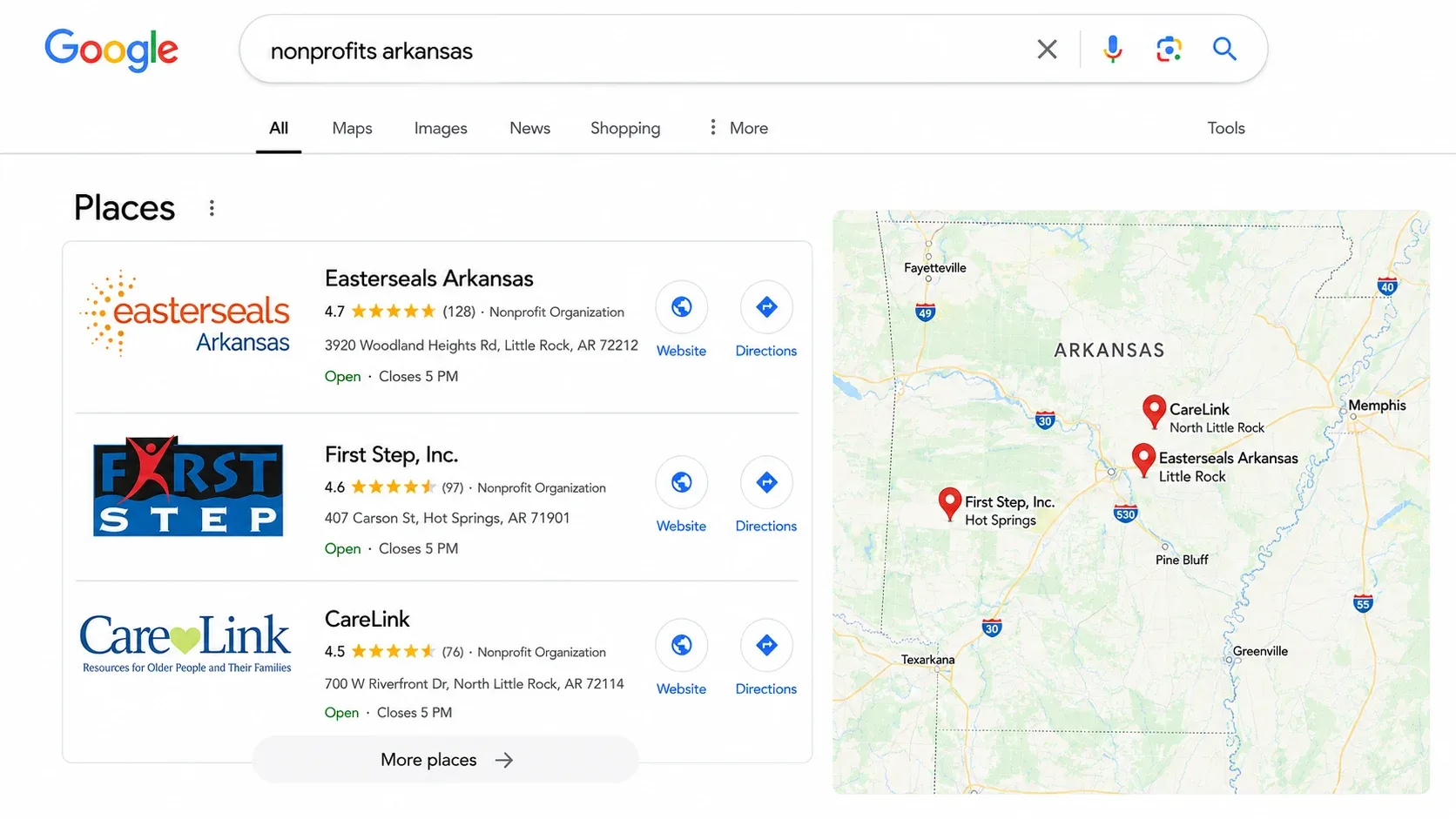
Google Business Profile optimization overview showing map pack results for a local business search

Your Google Business Profile is a living listing, and optimization just means keeping it complete, accurate, and active enough that Google shows it when the people you’re trying to reach are searching nearby.

Jump to Section

  • #what-goes-into-a-complete-gbp-profile

    “>Building a complete profile

  • #why-does-posting-to-your-gbp-help-you-rank

    “>Posting cadence

  • #how-is-gbp-optimization-different-for-a-nonprofit

    “>The nonprofit playbook

  • #your-map-pack-position-is-a-business-asset

    “>Your map pack position

Type "HVAC repair near me" into Google and you’re not browsing; you’re about to call someone. That intent is why local searches convert at a rate paid social rarely touches, and it’s why the map pack showing up above everything else isn’t a coincidence. Three spots. Dozens of competitors. One shot to show up.

Type "food pantry near me," "free tax help near me," or "senior meal program near me" and the stakes change but the mechanic is identical. Someone nearby needs what you offer right now, and those same three map pack spots decide whether they find you or the organization across town.

That’s the reframe most GBP advice misses. For a business, losing a map pack placement is a lost sale. For a food bank, a legal aid clinic, or a youth program, it’s a person who needed help and couldn’t find you. This playbook works for any local organization fighting for those three spots, and because nonprofits are running a harder version of the problem, they get

Home

” target=”_blank” rel=”noopener noreferrer”>iProv uses with growth-minded businesses and mission-driven nonprofits in Little Rock, and it starts with something most people underestimate: your category selection.

Why Does Your GBP Category Matter So Much?

Pick the wrong primary category, and Google won’t know what you do, no matter how complete the rest of your profile is. Most organizations default to something too broad, and that single choice tanks their local rankings before the competition even starts.

Local Search Ranking Factors

” target=”_blank” rel=”noopener noreferrer”>Whitespark’s 2026 Local Search Ranking Factors ranks the primary category as the number one local pack ranking signal across the board. Not top five. Number one. Which means a business in Little Rock competing for "breakfast near me" needs its primary category set to "Breakfast Restaurant," not the catch-all "Restaurant." The broader your category, the more Google has to guess at your relevance. And Google doesn’t reward guesswork; it rewards specificity.

The same trap catches nonprofits, and it’s usually worse. Most default to "Non-Profit Organization," which tells Google almost nothing about what they do or who they serve. A food bank’s primary category should be "Food Bank." A shelter’s should be "Homeless Shelter" or "Family Service Center." A youth program should say exactly that. Pick the category that matches what someone in need would actually type, not the one that matches your legal filing status.


Secondary categories aren’t an afterthought either.

Wouldn’t it be awesome to get insights like these right in your inbox?

We thought so too. Our newsletter delivers strategies that actually drive results. Join now for free!

This field is for validation purposes and should be left unchanged.

Pull up your profile right now and read your primary category out loud. If it sounds like it could describe a hundred different organizations, you’re leaving visibility on the table, and that’s just one piece of how Google reads your listing.

What Goes Into a Complete GBP Profile?

A complete profile does two things at once: it builds trust with the person searching, and it signals relevance to Google’s ranking logic. A half-finished profile does neither, and Google treats it that way.

Business description. You write this copy, so write it like you’re explaining what you do to someone you just met at a chamber event. Mention your focus keyword and service area naturally. Not stuffed in. Just clear: who you help, where you operate, what makes you worth calling. For a nonprofit, that means naming the community you serve and the need you meet, in the words a donor, a volunteer, or a person seeking help would recognize.

Photos. Don’t just upload a few at setup and call it done. WordStream found that businesses with 100 or more photos received 520% more phone calls than businesses with fewer images. That’s not a rounding error; it’s a completely different outcome. Add photos on a schedule. Quarterly at minimum. Google reads regular uploads as an active, legitimate operation.

Hours. Get them right, and keep them right. Someone drove from North Little Rock because Google said you were open, and found a locked door at 2pm on a Tuesday. That’s not an inconvenience; that’s a lost customer, or a volunteer who won’t come back. Update your hours every time something changes, and always double-check before a holiday weekend.

Attributes. These are the filter details: "women-owned," "free Wi-Fi," "wheelchair accessible," "LGBTQ+-friendly." They show up in search results more than most organizations realize. Someone searching for a specific type of service in Sherwood may be filtering on exactly one of these. For a nonprofit serving a specific community, accessibility and identity attributes are how the right person confirms you’re a place they can walk into. If you have them and haven’t flagged them, you’re invisible to that search.

Google doesn’t have the ability to visit your office or call your team. It reads your profile and makes inferences. A thin profile infers low effort. A complete one infers an organization worth putting in front of people. That’s the whole mechanic.

Worth noting: the discipline it takes to maintain a GBP, updating it, adding to it, treating it as a system rather than a one-time form, is the same discipline behind everything that compounds in marketing. If you want to understand how that connects to longer-term growth, iProv’s

Strategy vs. Tactics: What Every Business Owner Needs to Know

” target=”_blank” rel=”noopener noreferrer”>strategy vs. tactics guide is a good place to start.

Once your profile is complete, the next lever that moves your ranking is reviews, and how you handle them matters more than most organizations realize.

How Do Reviews Actually Affect Your Local Pack Ranking?

Reviews are a direct ranking signal, not just social proof, and the weight they carry keeps growing. According to

Local Search Ranking Factors

” target=”_blank” rel=”noopener noreferrer”>Whitespark’s 2026 Local Search Ranking Factors, reviews now account for approximately 20% of local pack ranking weight, up from 16% in 2023.

Three things actually move the needle: quantity, recency, and your response rate.

Quantity is straightforward. More reviews from real customers signals to Google that your business sees consistent traffic and delivers consistent experiences. Recency matters just as much. A business in Little Rock with 200 reviews and nothing posted in 18 months looks dormant. Google wants to surface active businesses, and fresh reviews signal that you’re still operating and still earning trust. Response rate is the piece most organizations miss entirely. When you respond to reviews, Google sees an actively managed profile. That activity feeds the algorithm.

The organizations that win on reviews aren’t doing anything exotic. They ask at the right moment: right after a positive interaction, when the experience is still fresh. They make it easy by sending a direct GBP review link, either via text or in a follow-up message. And they meet people where they already are. For most service businesses, a text message outperforms an email link by a wide margin. People open texts.

On responses: reply to every review, positive and negative. For negative reviews, acknowledge the experience specifically, offer a path to resolution, and keep it brief. You’re not writing for the upset customer. You’re writing for the next 50 people who will read that exchange.

Nonprofits have a wrinkle here that businesses don’t, and it’s worth handling carefully. Who you ask for a review, and who you never pressure, is a real decision. That’s covered in the https://www.searchenginejournal.com/why-dynamic-profiles-are-the-new-local-ranking-factor/568200/

” target=”_blank” rel=”noopener noreferrer”>Search Engine Journal analysis documents the shift clearly: Google now rewards profiles that demonstrate behavioral and engagement signals over time. A profile that gets updated, posted to, and interacted with outperforms one that sits unchanged, even if the static profile has better reviews.

Offers are where most businesses leave money on the table. When you write "15% off through July 31" instead of "summer savings available," click-through rates climb, and that specificity is what the Offers format is built for. Updates and Events exist too, and they pull their weight for things like announcing new hours or putting a specific date on the calendar. If you’re a business and you’re only going to use one format consistently, Offers with concrete language is where to start. (Nonprofits should flip that priority toward Events and Updates, for reasons the

Location-Based Advertising: The Targeting Works, Here Is What Makes It Convert

” target=”_blank” rel=”noopener noreferrer”>location-based advertising, you create compounding reach rather than isolated wins. The next question is whether you can actually measure what’s working, and that’s where most organizations lose the thread.

How Do You Track Whether Google Business Profile Optimization Is Working?

Open Google Business Profile Insights and pull the same four numbers every month. Most organizations either skip this entirely or glance at their review count and call it done. GBP gives you actual behavioral data that shows whether your profile is converting attention into action.

Search views tell you how many people discovered your profile while searching Google Search. Map views show how many found you through Google Maps. These two numbers together tell you whether your profile is showing up at all. But the metrics that actually tell you whether your profile is converting are direction requests and calls.

Direction requests signal physical intent. When someone asks Google for directions to your location, they’ve made a decision. They’re not browsing. Calls carry the same weight: someone picked up their phone and dialed because your profile gave them enough confidence to act. If your search and map views are growing month over month but calls and direction requests aren’t moving, that’s a conversion problem sitting inside your profile. A handful of weak photos, a description that doesn’t say what you actually do, or a review count that’s stalled can all suppress that final click-to-action.

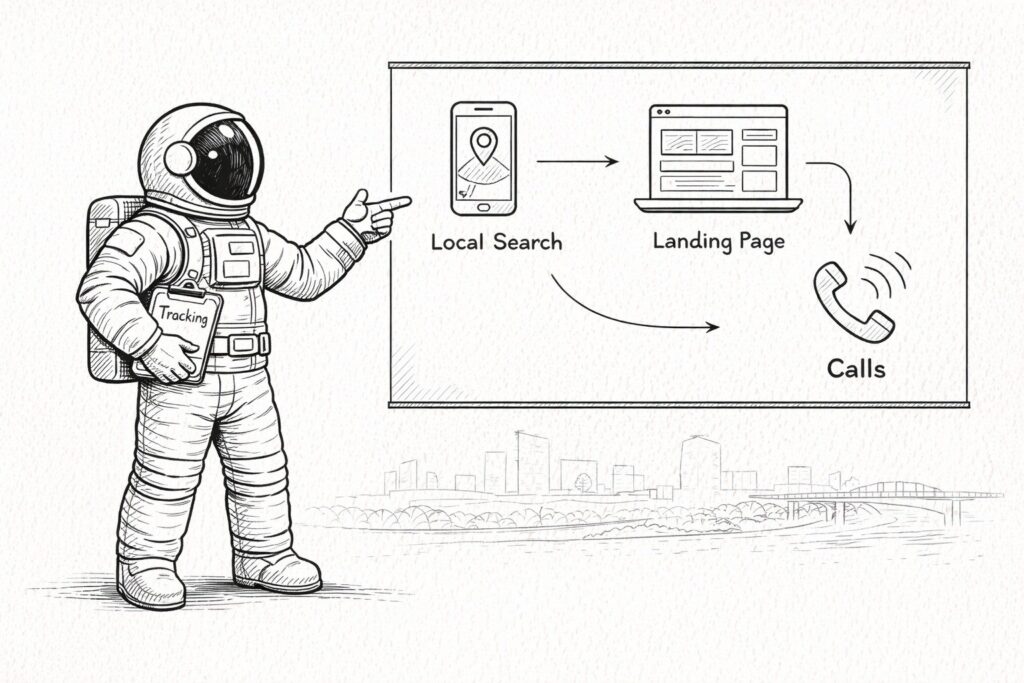
For local businesses in Little Rock, a GBP that consistently generates calls and direction requests is the foundation of a

How a Lead Generation Funnel Turns Local Search Into Calls in Little Rock

” target=”_blank” rel=”noopener noreferrer”>local lead generation system. The profile doesn’t close the sale, but it is where intent meets opportunity. If the top of that funnel is leaking, everything downstream suffers.

Set aside ten minutes at the start of each month for a simple check-in: review any new responses you owe, look at whether your most recent posts drove any engagement, confirm your hours and service list are still accurate, and add at least one new photo if you haven’t in the last few weeks. In a competitive market like Central Arkansas, that monthly rhythm is what separates organizations that hold their map pack position from organizations that wonder why they dropped off.

How Is Google Business Profile Optimization Different for a Nonprofit?

The levers are the same. Categories, completeness, reviews, posting, and tracking move a nonprofit’s ranking exactly the way they move a plumber’s. What changes is who’s searching, what you want them to do, and which of those levers can backfire if you run the for-profit version of the play. Most GBP guides never make that distinction, which is how nonprofits end up with a technically optimized profile that’s optimized for the wrong audience.

Who is actually finding your nonprofit on Google?

A business has one audience: people who might buy. A nonprofit’s profile is working for three groups at once. Donors who give money. Volunteers who give time. And the people you actually serve. Each of them searches differently and wants something different when they land on your listing.

The people you serve usually search by need: "free legal aid near me," "diaper bank," "food pantry open today." Donors and volunteers are more likely to search by name or cause after hearing about you somewhere else. Your profile has to hold up for all three, and the map pack placement matters most for the audience that’s easiest to forget, which is the people you serve. They’re the ones for whom showing up in those three spots is the difference between getting help and not.

Which GBP category should a nonprofit choose?

Do not settle for "Non-Profit Organization" as your primary. It’s the single most common nonprofit GBP mistake, and it’s the same broad-category trap that buries a "Restaurant" competing for "breakfast near me."

Set your primary to the service someone would search for. Categories like "Food Bank," "Homeless Shelter," "Social Services Organization," "Youth Organization," "Community Center," and "Family Service Center" all exist for a reason. Match your primary to the one that describes your core work, then add secondary categories for every distinct program you run. A single organization might legitimately carry "Food Bank," "Non-Profit Organization," and "Youth Organization" if that’s the range of what it delivers. The rule is the same as it is for any business: specific beats broad, and every real service earns a category.

Should you ask the people you serve for reviews?

Reviews rank you, so you do need them. But the source matters more for a nonprofit than for anyone else.

Volunteers, donors, board members, event attendees, and community partners are the right people to ask, and they’re usually glad to. Build the habit around them: a quick text with your GBP review link after a volunteer day, a fundraiser, or a partner event.

The people you serve are a different question, and the default answer is no pressure, ever. For some services, a public review tied to a real name can compromise someone’s privacy or safety. Think domestic violence support, recovery programs, immigration services, anything where being publicly associated with your organization carries risk. Never push a beneficiary toward a review. If someone offers one unprompted and clearly wants their story told, that’s their call to make, not yours to solicit.

When you respond to reviews, remember your readers include grant officers, corporate sponsors, and someone deciding whether it’s safe to walk through your door for the first time. Reply to every one, keep it warm, and keep it brief.

What should a nonprofit post about?

Skip Offers. That format is built for discounts and coupons, and it reads wrong coming from a mission-driven organization. Lean on Events and Updates instead, and this is where nonprofits have a real advantage most businesses don’t use.

Events is built for exactly what fills a nonprofit calendar: fundraisers, volunteer days, program enrollment deadlines, galas, drives. Put a specific date on it. Updates carry program news, impact moments, and current needs. The specificity lesson still holds, it just points at a different thing. "Volunteer orientation, Saturday, 9am, sign up here" beats "volunteers always welcome." A concrete date plus a single clear ask is what earns the click.

How does your GBP connect to donations, volunteers, and grants?

Point your profile’s website button and your posts at the page that matches the action you want, not just your homepage. A volunteer post should link to the volunteer form. A year-end appeal should link to the donation page. Sending everyone to the homepage and hoping they find their way is how you leak the intent you worked to create.

Track it the way you’d track anything else. Direction requests and calls still count, and for a nonprofit a beneficiary getting directions to your pantry is the win, full stop. On top of that, add UTM parameters to the links you post so your analytics can tell you which posts drove donations and volunteer sign-ups and which drove nothing. Most nonprofits skip this, which means they can’t make a defensible case about what’s working.

There’s a second payoff that businesses don’t get. An active, complete, well-reviewed profile is part of the same credibility case that shows up in a grant application. A funder who searches your name and finds a current profile, recent posts, and real reviews sees an organization that’s operating and trusted. One that finds a stale listing sees the opposite. And if your organization qualifies for the

Google Ad Grant

” target=”_blank” rel=”noopener noreferrer”>Google Ad Grant, which can provide up to $10,000 per month in free Search advertising, your GBP is often where that traffic lands and converts. The profile, the grant, and your website work as one local visibility system, and the profile is the piece that grounds it in a real place people can find.

1.00

Questions Organizations Ask About GBP Optimization

How Long Does GBP Optimization Take to Show Results?

Thirty to sixty days is the typical window before you start seeing movement in local pack rankings. Category selection and reviews tend to move fastest; Google treats both as strong signals for trust and relevance.

But "typical" depends heavily on your market. A Conway bakery going after "custom cakes near me" is running a short race. A Little Rock personal injury attorney trying to crack the top three is not. Thin local markets can show real movement in weeks. Crowded categories? Honest answer: three to six months of consistent effort. Set your expectations against your actual competitive landscape, not some generic average.

Can a Nonprofit Use GBP the Same Way a Business Does?

Mostly, yes. The ranking levers are identical: category, completeness, reviews, posts, tracking. The differences are audience and execution. You’re serving donors, volunteers, and the people in your programs rather than a single buyer. You lean on Events and Updates instead of Offers. And you’re more careful about who you ask for reviews. Get those three things right, and the rest of the playbook applies directly.

Our Nonprofit Serves Vulnerable Clients. Should We List Our Address?

Not necessarily. If publishing your street address could put clients or staff at risk, and this is a real concern for shelters and some crisis services, GBP lets you register as a service-area business and hide the physical address while still appearing in local results for your area. You keep the visibility without publishing a location that needs to stay private. Set your service area to the communities you cover and let the profile work without pinning a door to a map.

Is Google Business Profile the Same as Local SEO?

No. GBP is a piece of local SEO (an important one), but local SEO also covers your website’s local signals, consistent citations across directories, and inbound links pointing back to your site.

That said, GBP is usually where the fastest wins are. Map pack results show up above organic listings, so your profile often gets more eyeballs than your website for high-intent searches. Start there. Build the rest of your local SEO around it. The two reinforce each other, but the profile is the faster lever.

How Often Should I Update My GBP?

At minimum: one post per week, every new review answered within 48 hours, and a monthly check on your hours, services, and contact details to catch anything that’s drifted.

The organizations that rank consistently in Little Rock and across Central Arkansas don’t treat GBP as a project with a finish line. It’s a recurring task: ten focused minutes a week. That’s genuinely enough to stay ahead of competitors who touch their profile once a quarter and then wonder why their rankings slipped.

Your Map Pack Position Is a Business Asset

Setting up a Google Business Profile and walking away is the default move for most Little Rock organizations. The ones showing up at the top of the map pack didn’t get there that way.

Consistent optimization is what separates them. Updated photos. Responded reviews. Categories that actually reflect how people search. A posting cadence that doesn’t go silent for months. None of it is complicated, but it adds up, and it compounds over time.

For a business, that compounding shows up as calls and customers. For a nonprofit, it shows up as donors who find you, volunteers who sign up, and people in need who reach the door instead of driving past it. Same levers, higher stakes.

Honestly, most people we talk to would rather spend that time on their actual work, running the business or running the programs. That’s a completely fair call, and it’s exactly why this kind of work gets handed off.

iProv offers a free GBP audit for businesses and nonprofits across Little Rock and Central Arkansas. We pull up the profile, look at what’s working and what’s quietly costing you visibility, and give you a straight read on where the real leverage is. No pitch deck. Just a useful conversation.

Contact iProv

” target=”_blank” rel=”noopener noreferrer”>Contact iProv to get started.

Don't Just Read About It


Ready to Move Your Mission Forward?

Engage iProv

Related Posts

Illustration representing remote testing in marketing with data-driven decision making

End The Guessing Game. Start Remote Testing.

Sarah Olds
Astronaut organizing $10,000 in Google Ad Grant funding for nonprofit search advertising strategy

Your Nonprofit Has $10,000 in Google Ads Every Month. Most of It Is Going to Waste.

Sarah Olds
How a Lead Generation Funnel Turns Local Search Into Calls in Little Rock cover

How a Lead Generation Funnel Turns Local Search Into Calls in Little Rock

Sarah Olds

Footer

More from iProv

  • Marketing & Strategy News
  • Outcomes
  • Careers at iProv
  • Contact

Who We Help

  • Digital Marketing for Dentists
  • Digital Marketing for Non-Profits

Connect on Social

  • Facebook
  • Instagram
  • LinkedIn
  • YouTube

Made with 💚 by iProv | Copyright © 2026 iProv. All rights reserved. Privacy Policy