If you’ve been focusing solely on traditional SEO—keywords, backlinks, and rankings—you’re not alone. But search has evolved. Google, Bing, and AI-powered assistants prioritize answers and user intents, not just pages that match keywords.
This shift means that even well-optimized sites can miss opportunities because they aren’t structured to provide clear, direct answers. That’s where Answer Engine Optimization (AEO) comes in.
In 2026, search engines aren’t just indexing pages. They’re understanding and responding with answers, often in the form of featured snippets, knowledge panels, or AI responses that pull directly from structured content. To thrive, your content must do more than rank: it must answer.
Key Takeaways
- AEO (Answer Engine Optimization) focuses on structuring content so search engines can understand and extract answers directly.
- Traditional SEO is still relevant, but AEO complements it by improving visibility in featured snippets and AI responses.
- AEO requires clear language, direct answers to common queries, structured data, and content formats search engines can interpret.
- Businesses in local markets—like Arkansas service providers—can benefit from AEO by targeting local intent paired with answer-ready content.
- Implementing AEO increases your chances of appearing in rich results, voice search, and AI-powered answers that users trust.
What Is Answer Engine Optimization (AEO)?
AEO, or Answer Engine Optimization, is the practice of optimizing content so that search engines can easily extract precise answers and display them directly in the search results. This can be achieved through various formats, such as featured snippets, knowledge graphs, or AI-generated responses.
Unlike traditional SEO, which primarily focuses on improving keyword rankings, AEO emphasizes understanding user intent and providing direct answers to their questions. AEO content is not only discoverable but is also utilized by search engines to deliver immediate responses.
To illustrate, consider the difference between a standard search result and a Google "answer box" or an AI-generated answer. AEO enables your content to be that immediate answer users are seeking.
High-authority explanation: Google’s own Search Quality Evaluator Guidelines emphasize the importance of answering user needs accurately and comprehensively.
How AEO Differs From Traditional SEO
Traditional SEO focuses on ranking pages for queries like:
- “best HVAC services Little Rock”
- “plumbing repair cost near me”
This still matters. But AEO focuses on queries like:
- “how much does HVAC repair cost in Little Rock?”
- “what are typical plumbing repair steps?”
AEO aims to give precise answers to user questions that search engines can use in:
- Featured snippets
- Knowledge panels
- Voice assistants
- AI answer responses (e.g., Bard, Bing Chat, ChatGPT)
While SEO gets clicks, AEO answers immediately. That means increased visibility, more trust, and often more qualified engagement.
Why SEO Alone Isn’t Enough in 2026
Search engines are evolving:
- AI-powered results pull direct answers from structured content.
- Featured snippets show answers above the first organic result.
- Voice search (Siri, Alexa) returns spoken answers, not link lists.
- Chat responses summarize and interpret your content.
Traditional SEO might get you on page one—but AEO gets you used as the answer.
For example, a blog that simply ranks for “what is preventive maintenance” might appear at the top of results. But a page optimized for AEO will appear in:
- The featured snippet that directly answers the question
- Voice responses
- AI answer summaries
This broadens visibility across devices and interfaces.
Google’s own research shows that users prefer results that directly solve their information needs.
What Types of Content Work Best for AEO
AEO performs best when search intent and structure are aligned. These formats are particularly effective:
1. Question-and-Answer Sections
Answer common user queries directly and simply.
2. Lists
Numbered or bulleted lists help search engines extract points easily.
3. Tables
Structured data comparisons are easier for AI to parse.
4. Step-by-Step Guides
When a user wants to do something, structured steps are ideal.
5. Definitions
Short, precise explanations help search engines supply exact answers.
6. Schema Markup
Structured metadata helps engines understand the purpose of your content and how to index it for answers.
How to Write With AEO in Mind (Step-by-Step)
To optimize for answers (not just rankings):
- Start with the question users ask
Use tools like Google Search Console, AnswerThePublic, and People Also Ask. - Put the answer up front
Search engines reward direct answers, not buried paragraphs. - Use clean, simple language
Avoid industry fluff. Clarity wins in AEO. - Structure your content
Use subheadings written as questions and short, precise answers. - Add structured data (schema)
This helps engines classify and present answers. - Include local intent where relevant
For local service providers (e.g., Arkansas, Little Rock), include geo modifiers naturally.
AEO and Local Intent: Why It Matters for Regional Businesses
Local businesses can benefit significantly from answer engine optimization:
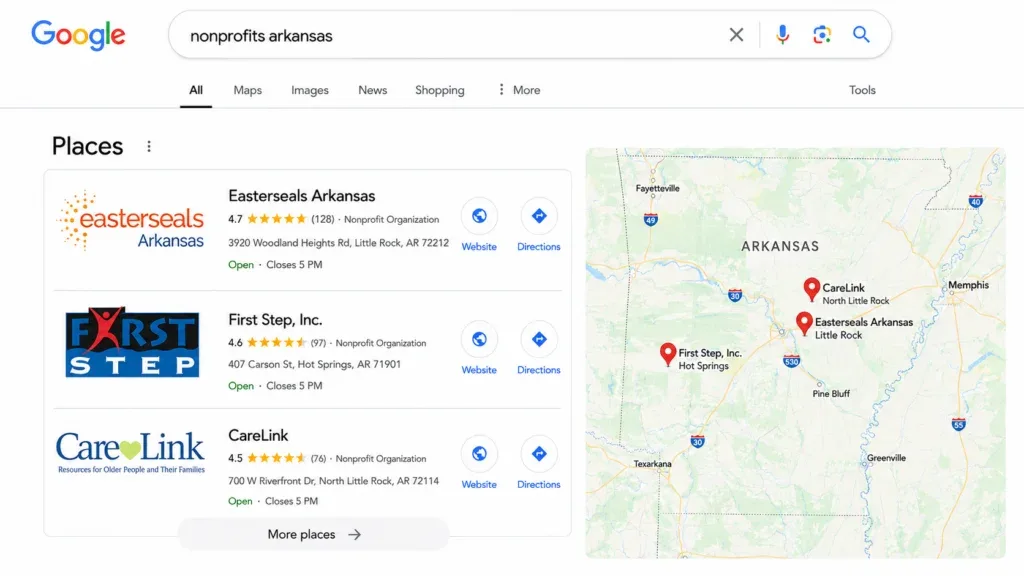
- People search differently when they include place names (e.g., “best plumbing in Little Rock” vs “how much do plumbers charge in Little Rock”).
- Google increasingly personalizes results by location and intent.
- AI assistants may answer with localized insights before showing links.
Optimizing for local answers enhances visibility in maps, AI responses, and voice search.
For example, combining AEO with local SEO might lead to direct answers for queries like:
- “How soon can a Little Rock HVAC tech respond?”
- “Standard plumbing rates in West Little Rock”
Even where traditional SEO shows results deep in page lists, AEO can surface answers right in the results.
AEO Metrics to Track (Beyond Rankings)
Instead of focusing only on rankings, track:
- Featured snippet appearances
- AI answer hits (Chat/SGE/Bard)
- Click-through rates on answer boxes
- Voice search engagement
- Bounce rates from direct answer content
These signals demonstrate that your content isn’t just found—it’s used.
What AEO Looks Like in Practice
Here are two examples of answer-ready structure:
Example: “What is preventive maintenance?”
Define it in one sentence.
Follow with a numbered list of key components.
Add a comparison table of frequency and cost.
Example: “How often should I service my HVAC in Little Rock?”
Answer immediately, then explain local climate impact, recommended intervals, and exceptions.
This format aligns with both user needs and search engine extraction logic.
The Future of Search: Answers First, Links Second
Search is no longer a simple match of keywords to pages. It is an information retrieval problem—and answers win.
AEO prepares your content to be part of that future.
You can still use traditional SEO, but in 2026 and beyond, your content must also be structured to provide answers that search engines can pull directly.
That doesn’t replace SEO. It amplifies it.
AEO vs SEO vs GEO: How Modern Search Actually Works Together
Search didn’t replace SEO. It islayered on top of it.
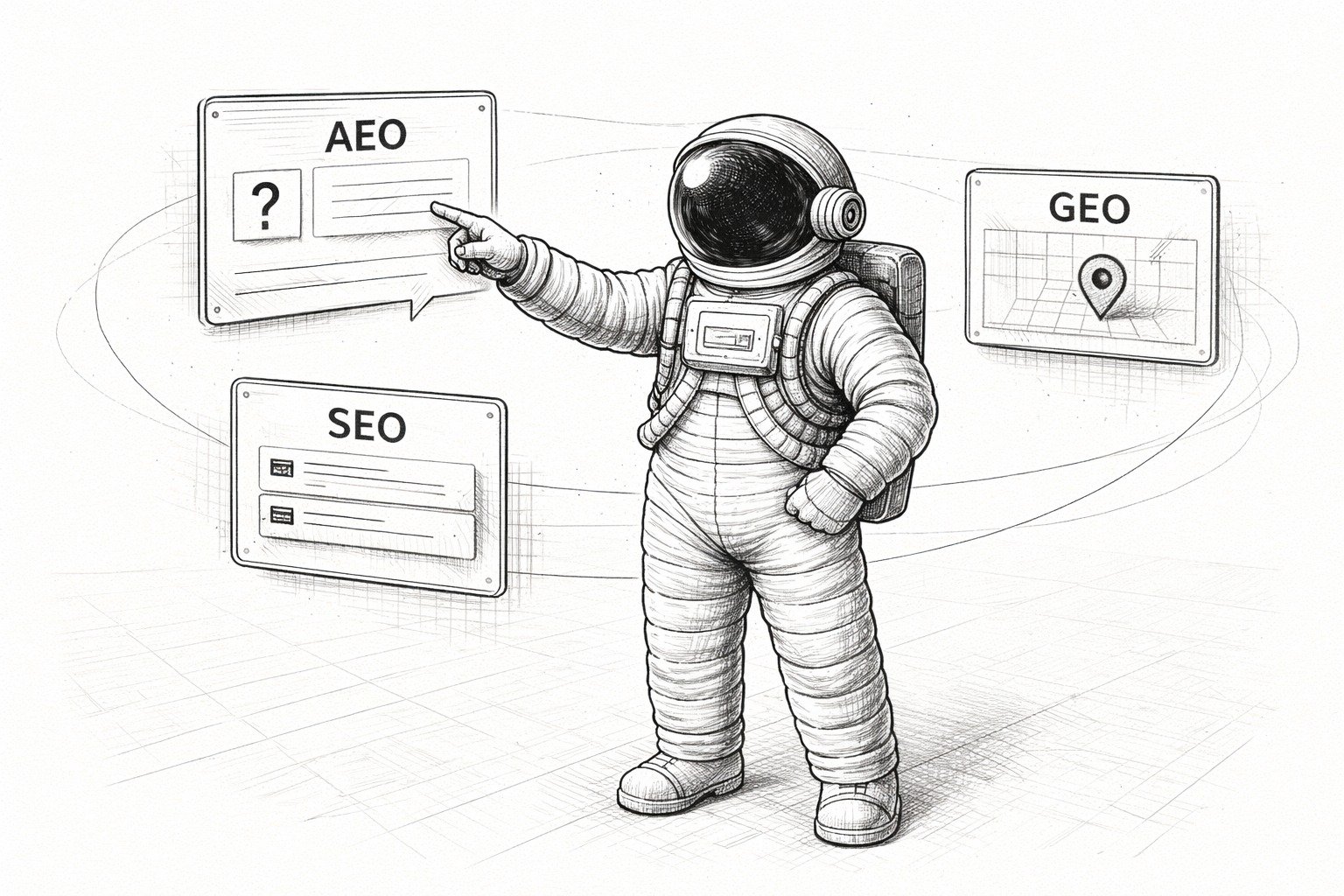
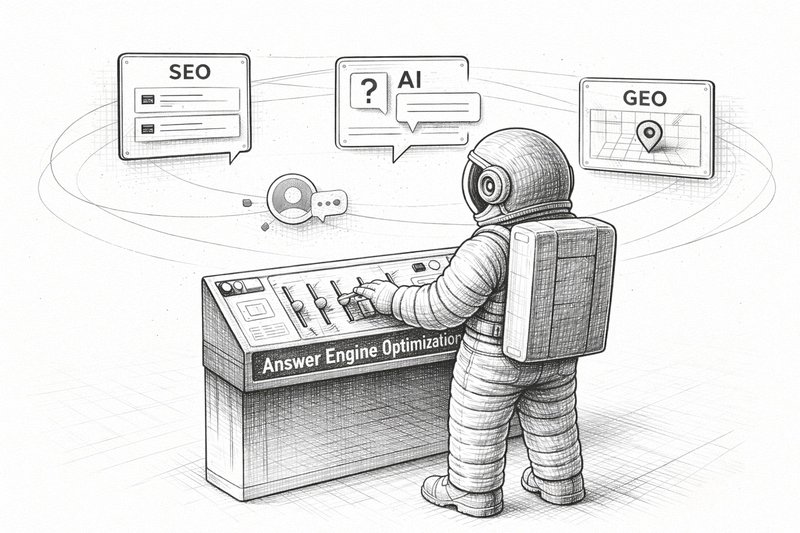
What most businesses miss is that SEO, AEO, and GEO are not competing strategies. They are three interlocking systems that determine how, where, and why your content is surfaced. If one is missing, visibility breaks down somewhere in the funnel.
Understanding how they work together is the difference between content that ranks and content that actually drives growth.
SEO: The Foundation (How You’re Indexed and Ranked)
Search Engine Optimization is still the base layer. Without it, nothing else works.
SEO answers this question for search engines:
“Is this page relevant, credible, and technically sound enough to be indexed and ranked?”
SEO focuses on:
- Keywords and topical relevance
- Site structure and internal linking
- Page speed, mobile usability, and crawlability
- Backlinks and authority signals
If SEO is weak, your content won’t reliably appear in search results at all. AEO and GEO cannot compensate for poor technical health or thin authority.
Think of SEO as earning the right to be considered.
AEO: The Interpretation Layer (How You Become the Answer)
Answer Engine Optimization determines whether your content is used after it’s indexed.
Search engines and AI systems increasingly ask a different question:
“Can we extract a clear, accurate answer from this page?”
AEO focuses on:
- Question-based headings that match real search behavior
- Paragraphs that answer one idea cleanly and directly
- Logical structure that AI can parse without guessing
- Supporting context that reinforces trust
A page can rank well and still fail at AEO. When that happens, search engines may summarize someone else’s content instead—even if you outrank them.
AEO is how you move from “listed” to “selected.”
GEO: The Intent Filter (Who Sees You and Where)
Geographic Optimization shapes visibility based on location and context.
GEO answers this question:
“Is this result relevant to the user’s physical location or service area?”
GEO influences:
- Local pack results
- “Near me” searches
- City- or region-specific intent
- Multi-location brand visibility
It relies on:
- Consistent NAP data (name, address, phone)
- Location-aware content
- Google Business Profile optimization
- Reviews, proximity, and local authority signals
For service-based businesses, GEO often determines whether traffic is actionable or irrelevant. National visibility means nothing if the user can’t actually hire you.
GEO ensures the right audience sees the content that SEO and AEO already qualified.
How They Work Together in Real Life
Here’s how modern search actually plays out:
- SEO qualifies the page
Search engines decide your content is relevant enough to rank. - AEO determines usability
The system evaluates whether your content can answer the user’s question clearly and confidently. - GEO filters delivery
The answer is shown (or not shown) based on location, service relevance, and intent.
If any layer fails:
- No SEO → you’re invisible
- No AEO → you rank but don’t get chosen
- No GEO → you attract the wrong traffic
The strongest content strategies are intentionally designed for all three at once.
Why This Matters More Now Than Ever
Search engines are no longer just directories. Platforms like Google are actively summarizing, rewriting, and synthesizing content for users.
That means:
- Fewer clicks
- Higher competition for trust
- Greater rewards for clarity and structure
Brands that only “do SEO” are optimizing for a version of search that no longer exists.
Brands that align SEO + AEO + GEO are optimizing for how people actually find and choose services today.
Where Most Businesses Get This Wrong
The most common mistake is treating these as separate initiatives.
SEO handled by one vendor.
Local SEO handled by another.
Content written without AEO in mind.
The result is fragmented visibility and inconsistent performance.
At iProv, we approach this as a single system:
- SEO establishes authority
- AEO earns selection
- GEO drives conversion
When aligned, each layer reinforces the others instead of competing for attention.
Unlock the Power of AEO with iProv
If your content isn’t designed to provide clear answers, you could be missing out on valuable visibility. Here’s what AEO can do for you:
- Gain higher visibility in featured snippets
- Achieve better placement in AI-driven responses
- Expand your reach in voice search
- Boost engagement with precise answers
Whether you’re serving clients in Little Rock, Arkansas, or managing multiple locations, answer engine optimization is the next step for local service businesses like yours. Don’t leave your potential untapped. Start structuring your content for success with iProv Online today!