Most small business advertising doesn’t fail because the owner “didn’t try hard enough.” It fails because the campaign was built to earn clicks, not customers. Clicks are easy to buy. Growth is earned through alignment: the right offer, the right targeting, the right landing page, and tracking that tells you the truth.
Advertising for small businesses is still one of the fastest ways to create demand, capture high-intent searches, and stay visible in your service area, especially when competition is louder, search behavior is changing, and attention is fragmented across Google, Bing, social platforms, and AI-assisted discovery. The opportunity is real. So is the waste when it’s done poorly.
This is built to do two things: 1.) explain why advertising matters more than ever for small businesses, and 2.) show what “done right” actually looks like so you can stop guessing and start investing with confidence. If you want iProv to handle it for you, you’ll also know exactly what to expect from a well-managed ad strategy.
Key takeaways
- Advertising works when it’s built for leads and revenue, not traffic.
- Small business ads fail most often due to weak tracking, mismatched targeting, and landing pages that don’t convert.
- Local (GEO) signals: service areas, location assets, reviews, and “near me” intent can dramatically improve lead quality.
- Ad quality and landing page relevance affect performance; Google explicitly positions Quality Score as a diagnostic measure tied to relevance and usefulness.
- AI-driven search experiences are changing how people discover businesses and where ads appear, raising the bar for clarity, trust, and intent-match.
Why is Advertising Essential For Small Businesses Right Now?
Organic reach is slower than it used to be. Word-of-mouth is powerful, but it’s not predictable. And “posting more on social” is not a strategy when you need a steady pipeline.
Advertising gives small businesses something rare: control. You can choose who sees your message, when they see it, and what action you want them to take. You can turn demand into leads in a week instead of a quarter. You can fill slow seasons, promote high-margin services, and test what messaging actually moves people.
But the biggest reason advertising matters right now is simple: the buyer is already searching. When someone types “emergency plumber,” “best med spa near me,” or “IT support for nonprofits,” they’re raising their hand. Paid search puts you in front of that intent at the moment it matters.
The mistake is thinking advertising is just visibility. Visibility is a byproduct. The real job is converting attention into action, then proving which actions became revenue.
The Benefits of Advertising for Small Business When it’s Done Right
When your ads are structured properly, advertising becomes less like gambling and more like a measurable acquisition channel. Here’s what “done right” delivers:
1.) Faster demand capture
SEO is essential, but it compounds over time. Ads let you capture buyers today. When you combine paid search with strong landing pages and proper conversion tracking, you can create a repeatable lead engine instead of hoping the next referral shows up.
2.) Better predictability
A well-managed campaign gives you levers: budget, geography, schedule, offers, keywords, audiences. Predictability doesn’t mean you control results; it means you control inputs and can optimize outputs. That’s the difference between “we tried ads” and “we manage acquisition.”
3.) Smarter local dominance
If your business depends on service areas, local foot traffic, or calls, advertising can sharpen your presence in the exact radius you care about—especially when paired with location signals like Google Business Profile and location assets (formerly location extensions). Google explicitly describes location assets as a way for ads to show address, map, and distance to reduce friction for local intent.
4.) Brand lift that supports every channel
Even when someone doesn’t convert on the first click, consistent paid visibility increases recognition. That recognition helps SEO clicks, direct traffic, and even conversion rates on social. Paid visibility often shows up later as branded search and higher trust.
5.) Proof
Most small businesses don’t need “more marketing.” They need clarity. Done right, advertising provides data that answers real questions: Which service sells? Which city converts? Which message produces calls? What is a lead worth? Without that, you’re operating on vibes.
Why Most Small Business Ads Fail
If you’ve ever said, “We ran ads, and it didn’t work,” you’re not alone. The common failure points are consistent:
They optimize for clicks instead of outcomes.
Click-through rate can be useful, but it’s not a business goal. The business goal is calls, form fills, booked appointments, purchases, and revenue.
They don’t track conversions correctly.
If your tracking is broken or incomplete, you can’t optimize. You end up pausing the wrong keywords, scaling the wrong campaign, and “testing” changes that aren’t based on truth.
The offer is vague.
“Quality service” is not an offer. People convert when the promise is clear, the value is obvious, and the next step feels safe.
The landing page doesn’t match the ad.
If your ad promises “same-day repair,” then the landing page must confirm same-day repair immediately. This is called message match, and it is one of the fastest ways to improve conversion rate without increasing budget.
Campaign structure is messy.
Too many keywords in one bucket, irrelevant searches slipping through, no negative keyword strategy, no segmentation by service, and no control over geography.
No follow-up system exists.
If leads aren’t contacted quickly, ad spend leaks. Ads don’t “close.” Your process closes.
This is why outsourcing to a team that builds the full system matters. iProv doesn’t just manage clicks. We manage outcomes: strategy, build, tracking, landing page alignment, and ongoing optimization tied to real leads.
Paid Search vs Paid Social: Which Should Small Businesses Prioritize?
Most small businesses benefit from both, but they do different jobs.
Paid search (Google/Microsoft Ads) captures existing intent.
The buyer is already looking. This is often the fastest path to calls and booked consults for service-based businesses.
Paid social (Meta, LinkedIn, etc.) creates demand.
It’s excellent for awareness, retargeting, and nurturing—especially if your service is considered or your audience isn’t searching urgently.
A practical starting point: if you sell a service people actively search for, you start with search. If your offering is new, premium, or needs education, you layer in social to warm the market.
And yes, Bing (Microsoft Ads) still belongs in the conversation for many businesses, because it reaches audiences across Microsoft’s network and can complement Google-based coverage.
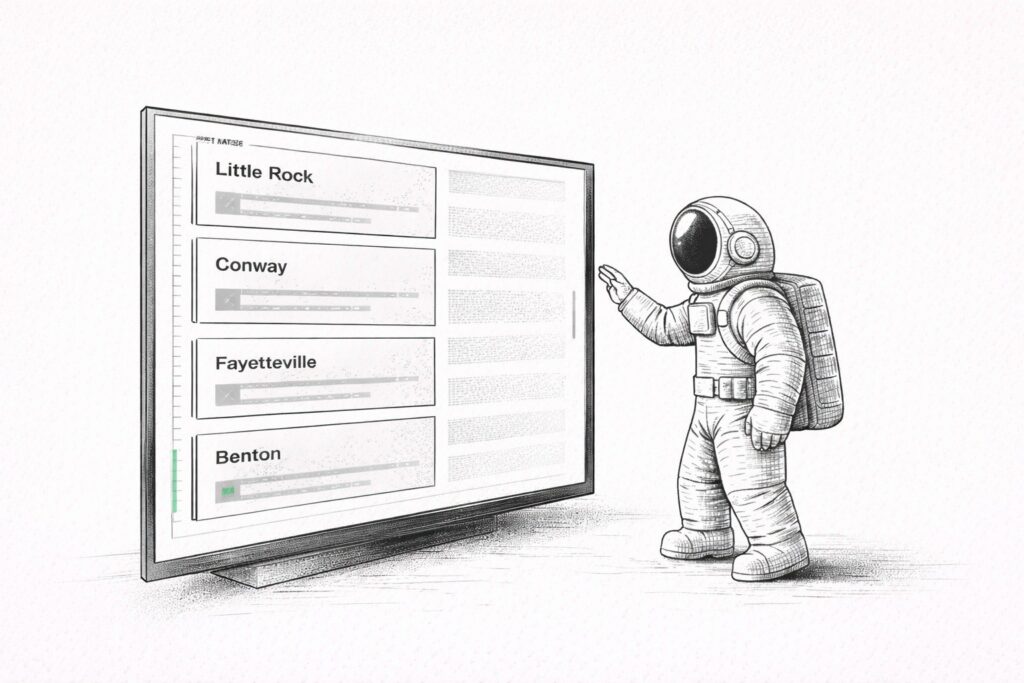
GEO: How to Win Local Advertising Without Wasting Budget
If you serve a region, local optimization is not optional. You can have the best ad copy in the world and still waste spend if your geography is wrong or your local trust signals are weak.
Start by treating location as a strategy, not a setting.
Local intent is different.
Someone searching “roof repair” is not the same as “roof repair near me.” “Near me” searches are often driven by urgency, mobile behavior, and proximity. You don’t need to force “near me” into every keyword, but you do need to build your campaigns and landing pages to satisfy local intent. That means clear service areas, local proof, and easy-to-take actions (call, directions, quote request).
Location assets reduce friction.
Google describes location assets as a way to show store address, map, and distance directly in the ad experience—helping people find you faster. When you pair location assets with call assets and well-written headlines, you’re not just advertising—you’re removing obstacles.
Local proof closes the gap.
A local landing page should answer: Do you serve my area? Can I trust you? What happens next? Reviews, before/after photos, service guarantees, and response time expectations matter. This isn’t fluff. It’s conversion leverage.
If you want iProv to run your ads, this is a core advantage: we build campaigns around the way real people search locally, then connect that intent to pages that convert—not generic homepages that leak leads.
AEO: How AI-driven Search Changes What “Visibility” Means
Search is no longer “ten blue links and a map pack.” AI-powered experiences are changing how people ask questions and how results appear. Google has publicly discussed new brand opportunities and ad placements connected to AI Overviews and “AI Mode,” which means the discovery layer is shifting. Google’s own documentation also explains that ads can appear in the presence of AI Overviews when relevant.
For small businesses, this changes the game in two practical ways:
1) Clarity wins.
Pages that answer questions directly—without rambling—are more likely to be used, cited, or surfaced in answer-style results. This is why your ad strategy should be paired with a content structure that’s easy for both humans and systems to interpret.
2) Trust signals matter more.
AI summaries and answer experiences elevate sources that appear credible, consistent, and specific. That means your business information needs to be coherent across your website, local profiles, and service pages.
Answer Engine Optimization (AEO) isn’t a separate marketing channel. It’s a writing and structure discipline: short answers, clean headings, real specificity, and proof. When iProv builds your advertising ecosystem, we can also align your service pages and local visibility signals so that paid traffic and answer-first discovery support each other rather than compete.
What “done right” looks like: the small business advertising system
Here’s the system a high-performing campaign needs—regardless of platform.
Step 1: Define the goal in business terms.
Not “traffic.” A business goal looks like: booked consultations, inbound calls over 60 seconds, quote requests, purchases, or qualified lead forms.
Step 2: Build tracking that matches the goal.
If you can’t tell which campaign generated the call, you can’t improve. Proper conversion tracking is foundational. It is also where most DIY campaigns break.
Step 3: Match campaign structure to how people search.
Separate campaigns by service line or intent. Use geographic segmentation when service areas differ. Keep ad groups tight enough that the ad copy clearly matches the keywords.
Step 4: Control waste with negatives and targeting rules.
“Relevant” isn’t automatic. Waste accumulates through broad queries, irrelevant geographies, and poor match strategy.
Step 5: Build landing pages that convert.
Landing pages aren’t decoration. They’re the conversion engine. They must match the promise and remove doubt quickly.
Step 6: Optimize based on outcomes—not platform vanity metrics.
A campaign can look “great” inside an ad dashboard and still be failing the business. Outcomes come from tying spend to leads and lead quality.
Why Quality Score and Relevance Matter
& What Small Businesses Should Know
Google describes Quality Score as a diagnostic tool that reflects how well your ad quality compares to other advertisers and notes that higher scores indicate ads and landing pages are more relevant and useful to the searcher.
Here’s the small business translation: if your keywords, ads, and landing pages don’t align, you often pay more for worse results. You can’t “hack” your way around relevance. The best way to improve efficiency is to improve the match between what the person wants and what your ad and page deliver.
That’s why “done right” doesn’t start with clever headlines. It starts with strategy and structure.
Measuring Success: What KPIs Matter For Small Businesses?
Small businesses don’t need a 40-slide report. They need clear answers:
- How many leads did we generate?
- What did each lead cost?
- How many leads became customers?
- What revenue did advertising influence?
- What should we change next?
Your metrics should ladder up to that:
Lead metrics: calls, forms, booked appointments, purchases
Efficiency metrics: cost per lead, conversion rate, cost per acquisition (when available)
Quality metrics: call duration, qualified lead rate, booked rate, close rate
Visibility metrics (supporting): impression share, top-of-page rate, CTR (contextual)
When iProv manages your advertising, reporting should be framed around outcomes you can understand and act on, not a spreadsheet of platform jargon.
When to bring in iProv: the moment you want results without guesswork
If you’re reading this because you’re tired of wasting money, that’s the signal. Ads are too expensive to run “kind of” correctly. And the market is too competitive to rely on generic campaigns that weren’t built for your service area, your buyers, and your actual margins.
If you want iProv to handle your advertising, you’ll get a managed strategy tied to performance—not just “campaigns launched.” That includes the parts most agencies gloss over: tracking, landing page alignment, GEO considerations, and iterative optimization.




You can also explore iProv’s broader strategy angle here:
https://iprovonline.com/blog/why-digital-marketing-strategy-matters/
https://iprovonline.com/blog/mastering-the-power-of-an-effective-marketing-strategy/
https://iprovonline.com/blog/advertising-campaign-strategy-why-does-it-matter-2/
And if local targeting is part of your growth plan, this is relevant context:
https://iprovonline.com/blog/arkansas-content-marketing-tips-for-teams/
FAQ: Questions Small Business Owners Ask About Advertising
How much should a small business spend on advertising each month?
A practical budget depends on your margins, close rate, and how quickly you can handle inbound leads. The better question is: what can you afford per customer acquisition while staying profitable? A managed approach starts with a controlled test, then scales what proves ROI.
Are Google Ads worth it for small businesses?
They can be, especially for high-intent services—if tracking, targeting, and landing pages are built correctly. If you’re buying clicks to a generic homepage with no conversion tracking, you’ll likely conclude “ads don’t work” when the real issue is structure.
Why do my ads get clicks but no calls or form fills?
Most often it’s misalignment: the keyword intent doesn’t match the offer, the landing page doesn’t confirm the promise fast enough, or the call-to-action is unclear. Fixing message match and landing page friction can change performance without increasing spend.
Should I run Google Ads or Facebook/Instagram ads first?
If people are actively searching for your service, start with search to capture demand. If your offering needs education or is impulse-driven visually, layer in paid social for awareness and retargeting. Many businesses do best with both.
Should I always add “near me” to my searches or keywords?
No. “Near me” is often implied by local intent, device location, and proximity signals. Instead of forcing it everywhere, build strong GEO foundations: service-area clarity, location assets, and landing pages that mention the area you serve.
How do AI answers and AI Overviews affect advertising?
They can change how users consume results and where they see sponsored placements. Google has described opportunities for brands in AI Overviews and AI Mode and provides guidance about ads shown with AI Overviews. The practical takeaway: clarity, trust, and intent-match matter more than ever.
Ready for lift off?
Let’s talk about what growth looks like for you.
Share a little about where you are and where you want to go, and we’ll connect you with a strategist who can help chart the course. No pressure, no fluff—just a conversation about building momentum. After you hit send, we’ll review your message and schedule a quick 20–30-minute call with a strategist to get a clearer picture of what’s aligned, what’s holding you back, and a few key moves that could help you grow faster with less friction, even if we don’t end up working together.