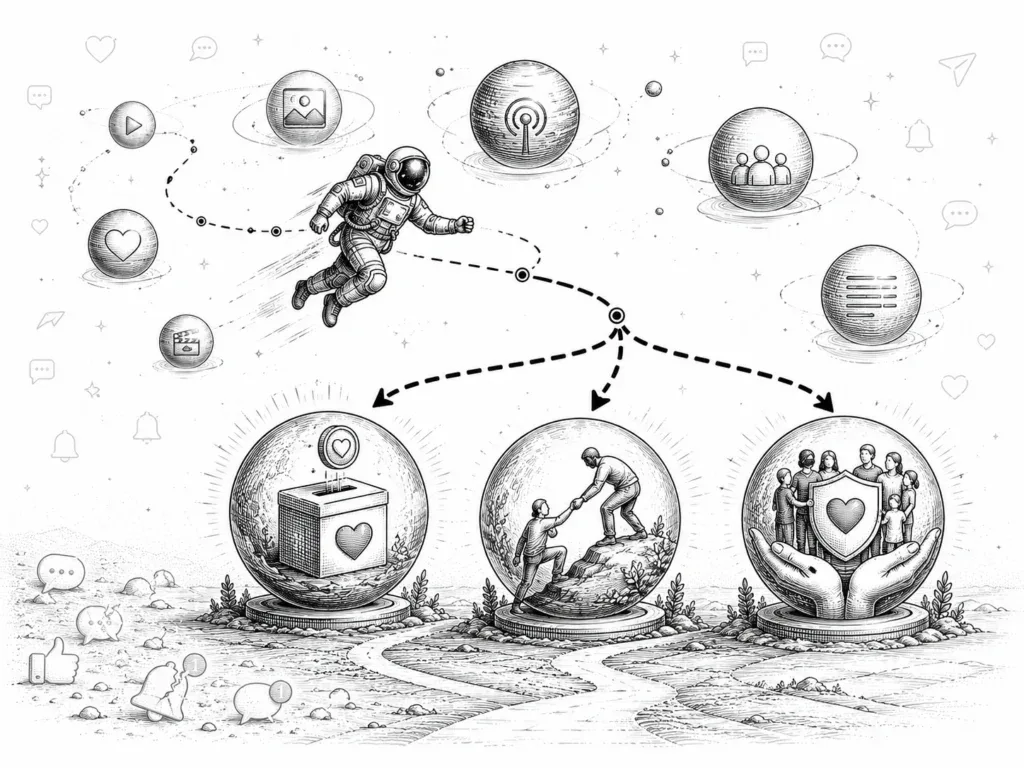
A small business digital marketing agency takes your online presence off your plate so you can focus on actually running your business.
Somewhere along the way, you tried to handle it yourself. The social media scheduler sat open in another tab. The SEO audit arrived in your inbox, got skimmed, and never came back up. You ran Google Ads for three months and watched the budget disappear without ever knowing whether a single customer came from it. Marketing went from feeling like an investment to feeling like a time tax you couldn’t stop paying. You’re not the only one who’s been here.
Did you know?
- A small business digital marketing agency builds a coordinated growth system, not just individual campaign tactics.
- 73% of small businesses lack confidence in their marketing strategy, and that gap is exactly what the right agency closes.
- Strategy before tactics is the #1 signal of an agency worth hiring; any agency that opens with a package list is selling execution, not strategy.
- Good agency-client relationships last 2 to 5 years, and alignment at the start determines whether yours will too.
- Red flags to watch for include guaranteed rankings, no discovery process, activity-based reporting, and early lock-in contracts.
- For Central Arkansas businesses, local market knowledge is a real advantage when choosing between local and national agencies.
- Common questions answered: cost ranges, timeline to results, local vs. national, and what to ask before signing.
Small businesses get sold on tactics one at a time. Each one promises results. None of them connect to a larger picture. The tactic is rarely the problem. The missing strategy is.
Agencies exist to build the engine you don’t have time to build yourself. That’s the work iProv does every day for small businesses across Central Arkansas: not selling tactics, but building the strategy that makes every tactic count.
What Does a Small Business Digital Marketing Agency Actually Do?
Put simply: a small business digital marketing agency takes the wheel on your online marketing. SEO, ads, content, social, your website, how they all connect. The goal is that you stop being the bottleneck and the business keeps moving.
The services most full-service agencies handle include search engine optimization (SEO), answer engine optimization (AEO), pay-per-click advertising (PPC), content marketing, social media management, email campaigns, and web design. Each one is a channel. Alone, any of them can produce results. Together, with a clear digital marketing strategy behind them, they produce something more durable.
Here’s the distinction that matters. Execution is setting up a Facebook ad or publishing a blog post. Strategy is knowing why that ad runs, who it targets, what page it lands on, and how it connects to the email sequence that follows. Most small businesses have execution without strategy. They have channels running in parallel that never reinforce each other.
Marketing channels that aren’t coordinated around a shared goal burn money doing it. SEO builds visibility over time. PPC brings traffic now. Content earns authority. Social keeps your name in front of people. Email follows up with the leads everything else generates. When these work together, they stop being line items and start being a growth system, one where each piece feeds the next. That shift is the difference between spending on marketing and actually investing in growth.
The best business growth strategies treat marketing the same way: as an integrated operation, not a collection of one-off projects.
Service lists are easy. Every agency has one, and most of them look nearly identical once you stack them side by side. The harder thing to evaluate is whether an agency can actually build those services into a system that gains traction over time, and whether they can point to why a specific piece belongs in your plan versus someone else’s. That’s not a sales pitch, that’s competence. And competence is rarer than the pitch deck suggests. Which brings up the question worth sitting with: does your business actually need an agency right now?
How Do You Know Your Business Needs a Digital Marketing Agency?
You’re spending money on marketing and genuinely unsure whether it’s working. Meanwhile, keeping up with it takes time you don’t have, so it keeps sliding to the back burner. That’s usually where the conversation starts.
There’s a specific exhaustion that comes from paying for something you can’t explain anymore. Every owner hits this wall differently. The symptoms vary. The root cause, almost always, doesn’t.
Most small business owners know they should be doing more with marketing. They just don’t feel confident about any of it. According to research from Constant Contact, 73% of small businesses lack confidence in their marketing strategy, and only 16% say they’re confident they’re using the right channels. That’s not a knowledge problem. It’s a bandwidth and clarity problem. And it shows up the same way whether you’re running a plumbing company in Conway or a boutique in the Heights.
It’s rarely one moment. More often, it’s six months of squeezing marketing into the gaps, and one day you look up and realize the gaps have gotten a lot smaller.
You’re posting on social media, but you couldn’t tell anyone what goal those posts are tied to. You’ve run Google Ads or Facebook Ads at some point, spent real money, and honestly weren’t sure if any of it worked. You’ve got some content, maybe an email list, maybe some paid spend here and there, but none of it connects. Each piece exists in its own silo. And underneath all of that, marketing is eating hours you don’t have, hours that should be going toward running your business, and you still can’t clearly explain what any of it is producing.
Most businesses hit a wall before they see it coming. The marketing setup that worked fine at $2M starts creaking at $5M, and by the time someone actually flags it, the funnel has already slowed down. That’s not mismanagement. That’s just what growth does to a lean operation.
For businesses in Little Rock, Conway, and the surrounding Central Arkansas area, there’s an added layer of difficulty. Local businesses aren’t just competing against each other. They’re competing for search visibility against regional chains and national brands with ad budgets ten times the size. A local agency that understands how search behaves in this market, which neighborhoods are growing, how people in Arkansas phrase their searches, and what local competitors are targeting brings something a generic national firm working remotely can’t replicate.
Not every business is at that point yet, and there’s nothing wrong with that.
An agency is not the right call for every business, and any agency worth working with will tell you that. If you’re still figuring out who your customers are, if you don’t have clear product-market fit, or if you genuinely don’t have the budget for a sustained effort, hiring an agency won’t fix those problems. Agencies accelerate what’s already working. They’re not a substitute for the foundation.
But if you have something that works, if customers refer you, if you close deals when you’re in front of the right people, and your problem is reach, that’s where the right agency changes the math.
If you’re not sure which channels are even worth considering, reading up on small business advertising options first will make the agency conversation go a lot better.
What Should You Actually Look for in a Small Business Digital Marketing Agency?
Not every agency with a polished pitch deck actually knows your business. The one worth hiring slows down before it starts spending. It asks questions. It listens before it recommends. That’s not a given. A lot of agencies will confidently tell you what you need before they’ve heard a word about what you do. iProv is built around that distinction: strategy before execution, every time.
Strategy comes first. The clearest signal of a good agency is what they ask you in the first conversation. Are they asking about your goals, your customers, your competitive position? Or are they walking you through a package menu? An agency that leads with solutions before understanding your problem is selling execution. A real strategic partner wants to know where you’re trying to go before mapping out how to get there. Those are two fundamentally different businesses, and they’ll produce two fundamentally different results.
Ask any agency you’re considering: “How do you structure a client’s marketing strategy?” If they stammer, give you a vague answer about “holistic approaches,” or just describe their service offerings, that tells you something. A good agency can describe a clear, repeatable system. iProv, for example, built a proprietary framework called VSTA (Vision, Strategy, Tactics, Alignment) that sequences every engagement the same way: start with where the business is going, build strategy around that, then select the right tactics, and keep everything aligned as it executes. That kind of documented framework means you’re not getting a custom improvisation every time. There’s a real process behind the work.
Reporting should connect to your business, not just the dashboard. Ask one simple question: did my phone ring more this month? If the report can’t answer that, it wasn’t built for you. Impressions and click-through rates are real numbers. They’re just not your numbers. Before you sign anything, find out exactly what they track and how it connects to actual revenue. The agencies that are worth it can tell you without hesitating.
Bring these to your next agency meeting. If you don’t love their answers, that’s data.
- “Walk me through what you’re actually doing in the first month. And realistically, what kind of number should I be seeing by day 90?”
- “How do you decide which channels to focus on first? What’s the logic there?”
- “Do you have examples from businesses similar to mine? I’d like to see what you actually built for them.”
- “What does your reporting look like, and how often are we getting on a call to go over it?”
You’re not trying to trick them. You’re looking for specificity. Vague answers to specific questions are a pattern worth paying attention to.
The difference between a vendor and a partner shows up over time. AgencyAnalytics’ 2024 benchmark data shows that agency-client relationships last an average of 2 to 5 years when the work is genuinely delivering value. Short retentions, the revolving-door kind, usually point to misalignment that was baked in from the start. A good agency asks hard questions early because they want the relationship to work. A vendor skips those questions to close the deal faster.
One honest note: this process takes time, and that’s normal. Setup® research on agency selection found that 75% of clients find the selection process time-consuming, and 77% say it’s far from simple. Don’t let that pressure you into a fast decision. The wrong agency will cost you more than the delay.

What Red Flags Should You Watch for When Hiring a Digital Marketing Agency?
The biggest red flags when hiring a digital marketing agency include guaranteed ranking promises, cookie-cutter proposals, activity-heavy reporting, pressure toward long contracts, and calls that leave you more confused than when you started.
When excitement kicks in, the hard questions stop. Warning signs don’t disappear. You just stop looking for them. That shift is exactly when the things that should stop you cold tend to slide right past.
1. They guarantee specific rankings or results.
Google changes its algorithm without warning, your competitors are hiring agencies too, and there are ranking signals no outside firm can control no matter how good they are. Any agency promising a number one position is either misleading you or about to chase shortcuts that will eventually get your site penalized. Confidence in a strategy is reasonable. Guaranteeing outcomes that depend on a search engine’s next update is not something any honest firm can do.
2. There’s no real discovery process.
If you walked away from a single 20-minute intro call with a full proposal in your inbox, that agency doesn’t know your business yet. A good agency asks a lot of questions before it recommends anything: what works for a law firm in Conway has almost nothing to do with what works for a restaurant in Little Rock. What you got wasn’t a strategy. It was a price sheet with your name on it.
3. Their reports are full of activity, not outcomes.
Pull out a recent monthly report and ask yourself: can I find, in the first three lines, whether leads increased? Whether anything I care about got better? If the answer requires scrolling through bar charts and follower counts to get there, that’s a choice the agency made. Good reporting starts with business outcomes, not channel metrics.
4. They push long-term contracts before they’ve proven anything.
Some commitment is normal. But a first engagement should include a reasonable evaluation window. An agency confident in their results won’t need a 24-month contract to keep your business.
5. You leave every call more confused than before.
There’s a specific kind of agency that’s very good at sounding thorough without actually saying anything. Long calls, lots of terminology, reports full of numbers that don’t connect to anything you care about. If you regularly hang up unsure what was decided or what happens next, that’s not a personality conflict. Good agencies have explained this stuff to people who’ve never thought about marketing before. They’ve had the “what does bounce rate actually mean” conversation enough times that plain language comes naturally. When it doesn’t, when the explanation of your own campaign leaves you needing a decoder ring, that’s a real signal about how the relationship is going to go.
There’s a separate consideration if your business is in Little Rock, Conway, North Little Rock, Sherwood, Benton, or Bryant. Central Arkansas has its own market logic. Search behavior here doesn’t match national averages, and the competitor landscape looks nothing like Dallas or Nashville. An agency working in this market daily has already figured those things out. One treating Arkansas like any other territory is starting from scratch, on your time and your budget.
Want to see what that looks like in practice before committing? iProv runs a VSTA deep dive that maps out your vision, strategy, and tactics first, before anyone executes anything.
What We Get Asked the Most About Hiring a Small Business Digital Marketing Agency
How much does a small business digital marketing agency typically cost?
Focused work like SEO or social media usually runs $1,000 to $5,000 a month for small businesses. If you want the agency to own strategy, content, and paid ads together, plan on starting around $5,000 a month. The honest answer is that it depends on how much you’re handing off. More ownership means more cost, but it also means more off your plate.
How long before I see results from working with a digital marketing agency?
Paid ads can show movement in 30 to 60 days, but give it real runway before you judge the numbers. The first month is testing. SEO is slower and most people don’t want to hear that: you’re looking at three to six months before organic traffic starts moving in any meaningful way. Most business owners expect ads to take longer and SEO to kick in faster. It’s usually the opposite.
Should I hire a local agency or a national one?
National agencies can do solid work. But when you’re a small business competing in a specific geography, you’re paying a premium for someone who’s Googling your market from a different city. A Little Rock agency already knows the local search environment, knows your regional competitors, and knows what resonates with Central Arkansas audiences. That context is built in, not billed for.
What’s the difference between a digital marketing agency and a freelancer?
A good freelancer is usually excellent at one thing: writing, ads, or design. That’s great if you know exactly what you need and you’re willing to coordinate it yourself. An agency brings a team that works together under a shared strategy. If you don’t have someone in-house managing all of that, the agency model is what keeps things from getting scattered.
What questions should I ask before hiring a digital marketing agency?
Start with: “What are you doing in the first 30 days, and what should I expect by day 90?” That question cuts through a lot of sales talk fast. Then ask how they measure success for a business like yours, how they report on it, and whether they have experience at your revenue stage. The quality of how they answer tells you more than the actual answers do.
Find the Right Partner, Then Build Something That Lasts
Finding the right small business digital marketing agency is less about finding the flashiest pitch and more about finding a team that asks good questions, sets honest expectations, and builds something that keeps working. The right partner doesn’t just run campaigns. They build a system that moves your business forward. If that’s what you’re looking for, start a conversation with iProv. And if you’re still in the research phase, this guide on working with a marketing strategy consultant in Little Rock is a good next read.