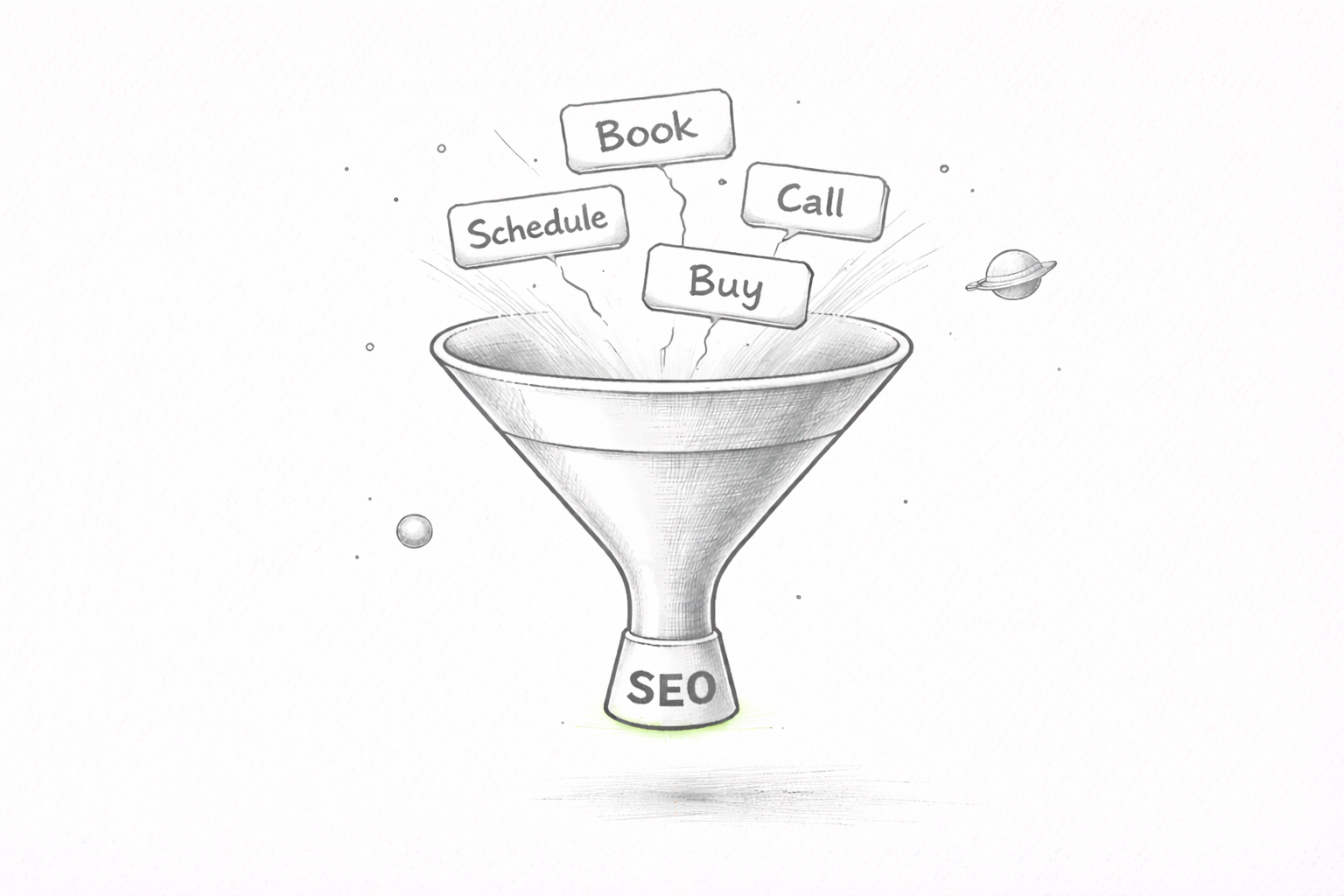
Action oriented keywords are search phrases that signal someone is ready to act, such as book, schedule, pricing, near me, or where to buy. You use them to narrow the funnel by matching the keyword to the right landing page, offer, and next step. When you track calls, forms, and bookings, you can see which action phrases produce qualified leads instead of casual research traffic.
Action Oriented Keywords: How to Narrow the Funnel
Action oriented keywords show intent. They tell you what the searcher wants to do next. You can use that intent to narrow your funnel, improve ad efficiency, and build landing pages that convert.
You see the difference fast in two searches. “Where to buy golf shoes” points to a purchase. “Best golf shoes” points to comparison and research. Both searches matter, but they need different pages, different calls to action, and different success metrics.
Key Takeaways
- Action oriented keywords signal intent to buy, book, call, visit, or request pricing.
- You narrow the funnel by matching the keyword to the right page type and the right next step.
- SEO, AEO, and Generative Engine Optimization (GEO) work better when your page answers the intent in the first screen.
- Paid search and social ads perform better when the landing page matches the action phrase exactly.
- The cleanest measurement comes from tracking calls, forms, bookings, and qualified leads.
What action oriented keywords are
Action oriented keywords are phrases that include a verb or a clear next step. The wording shows behavior, not curiosity. You can spot them by looking for terms like these.
Buy, order, shop, deal, coupon, discount
Schedule, book, appointment, consultation
Call, quote, estimate, pricing, cost
Near me, open now, directions, closest
Apply, enroll, sign up, register
Compare, review, best, top, vs
Some of these terms are high intent. Some are mid intent. “Pricing” often signals evaluation close to a decision. “Best” often signals research. Intent depends on the category, but the words give you a strong starting point.
How action phrases narrow the funnel
Your funnel gets narrower when your page reduces decision friction. Action oriented keywords help because they come with built in expectations. The searcher wants a specific outcome, and you can meet it fast.
A page that ranks for “best golf shoes” needs selection, comparison, and proof. A page that ranks for “where to buy golf shoes” needs location, availability, and a clear way to purchase or visit. The page that tries to do both often does neither cleanly.
You narrow the funnel when you build pages around one dominant intent and one dominant next step.
The page types that match action oriented keywords
Your keyword should decide your page type. This keeps your structure clean and your conversions easier to track.
| Keyword intent signal | What the searcher wants | Best page type | Best next step |
|---|---|---|---|
| where to buy, near me, open now | a nearby option | location page or store locator | call, directions, visit |
| pricing, cost, quote, estimate | a number and a path forward | pricing explainer or quote page | request a quote, call |
| schedule, appointment, consultation | a time slot | booking page or service landing page | book, call |
| order, buy online, ship | a transaction | product page or category page | buy, add to cart |
| best, top, reviews, vs | comparison help | comparison guide or review hub | email signup, product page |
How SEO, AEO, and GEO support action keywords
SEO helps you rank for action oriented keywords when your page matches intent and has a clear structure. You use the keyphrase in your title, your H1, and early in the page, then you support it with related terms that match real searches.
AEO helps your page win question based results. You place a direct answer near the top, then you use headers that mirror what people ask. Clear structure helps search systems pull your content into results.
GEO means Generative Engine Optimization. It focuses on making your content easy for answer engines to summarize accurately. You do that by using consistent terms, defining important phrases once, and writing sections that stand on their own. If your page is about action oriented keywords, your definitions, examples, and steps should be easy to extract.
How to find action oriented keywords for your business
You do not need a complicated process. You need a consistent process.
1) Start with your real offers and real next steps
List your money making services or products. Then list the actions someone takes to start. Call. Book. Request a quote. Purchase. Visit. Apply.
Now turn those actions into phrases that a searcher would type.
2) Use search behavior, not guesses
Pull search terms from places that already show intent.
- Search queries in Google Search Console
- Paid search search terms in Google Ads
- Website search box queries if your site has one
- Chat logs and call transcripts from your team
- Competitor page titles and headings for similar services
You are looking for verbs, local modifiers, and pricing language. Those patterns tend to map to action.
3) Separate research phrases from action phrases
Research phrases often include reviews, best, top, ideas, examples, guide, how to. Action phrases often include price, schedule, near me, quote, book, call, buy.
You can still use research phrases. You just treat them as top or mid funnel and connect them to a clear next step.
4) Add location modifiers when your service area matters
If you serve a defined region, your action oriented keywords should reflect that reality.
Examples
- “roof repair near me”
- “roof repair Little Rock”
- “roof repair Central Arkansas”
- “roof repair quote Little Rock”
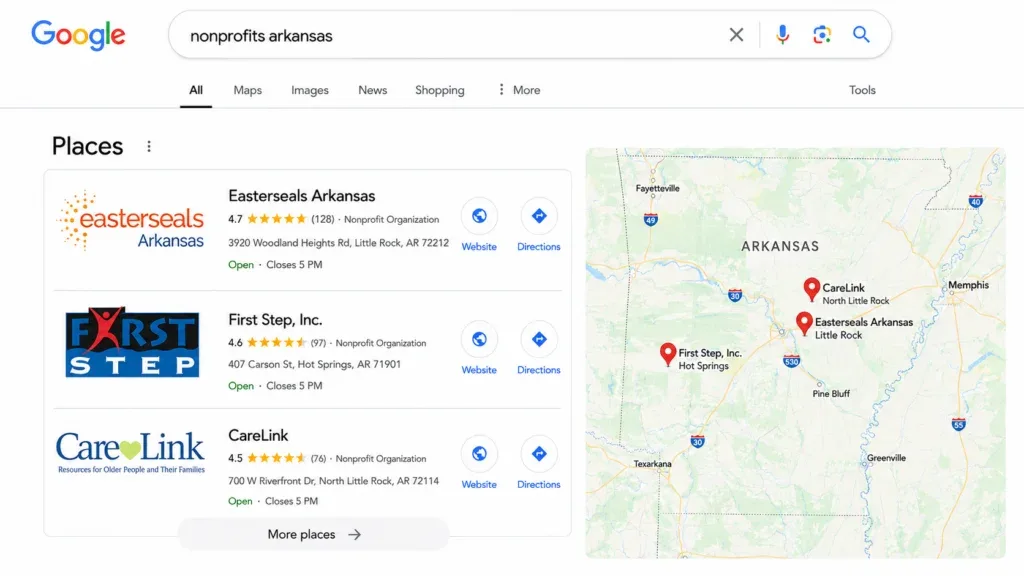
Local modifiers work best when your landing page confirms the area and the next step in the first screen.
The landing page rule that controls conversion
Action oriented keywords create an expectation. Your landing page either confirms it or breaks it.
If the search includes “pricing,” your page should discuss pricing ranges, what changes price, and how to get an exact quote. If the search includes “schedule,” your page should make scheduling easy and describe what happens next. If the search includes “near me,” your page should show the service area, address if relevant, and a clear contact method.
This is the most common failure pattern: the ad and keyword are specific, and the landing page is generic.
How email fits into action oriented keyword strategy
Email supports action phrases by catching the second chance. Many people click, skim, and leave. Email lets you follow up with the same intent language.
A simple structure works.
- One page captures the lead with a clear offer that matches the intent.
- One short email sequence answers the objections tied to that intent.
- One clear next step repeats in every message.
If the keyword is “pricing,” your emails should explain what affects cost and how to get an exact quote. If the keyword is “schedule,” your emails should explain the process and what to expect during the appointment.
A short checklist you can use for updates
Use this to refresh the old post without rewriting it into a novel.
- Add a direct definition of action oriented keywords near the top.
- Add a table that maps intent signals to page types.
- Add a section on SEO, AEO, and GEO structure for intent pages.
- Add a section on landing pages, tracking, and conversion actions.
- Add local examples if you target a region, such as Little Rock or Central Arkansas.
- Update the close with a clear next step and one link.
Call to action
If you want help choosing action oriented keywords, building landing pages that match intent, and connecting SEO, AEO, GEO, and ads into one strategy, schedule a free consultation on Contact iProv.