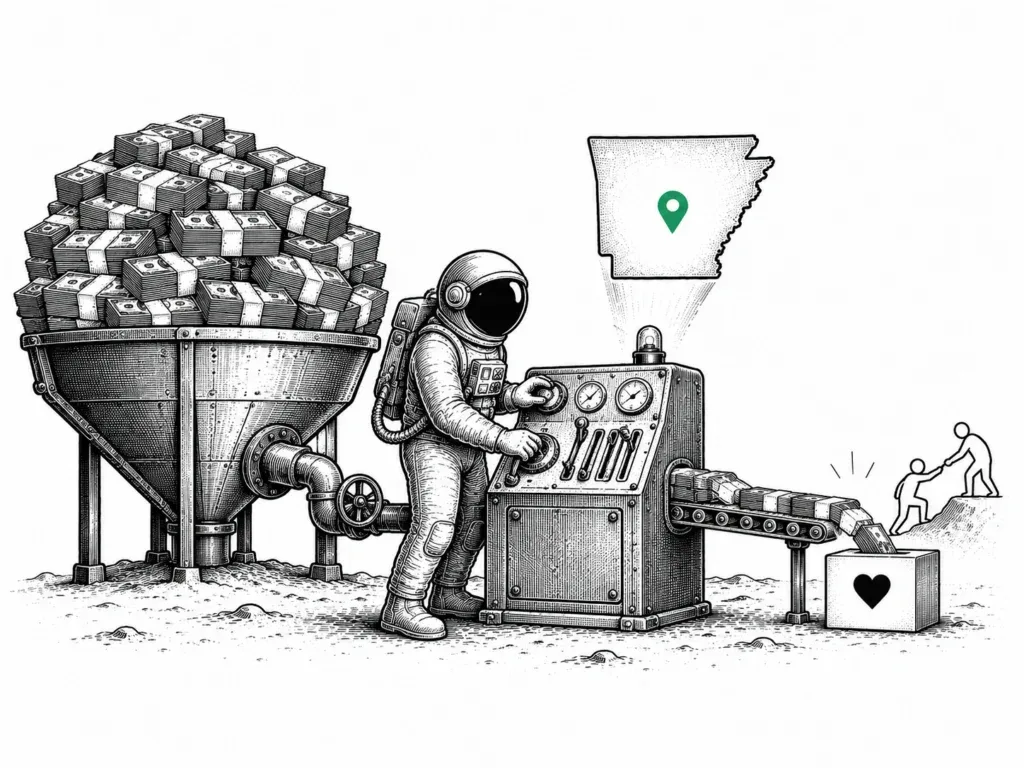
A nonprofit marketing strategy is the plan that connects your mission to the people who care enough to fund it, champion it, and show up for it year after year.
Key Takeaways
- Nonprofits face unique marketing constraints
- The lean nonprofit marketing stack
- Free tools Arkansas nonprofits should use
- Measuring outcomes, not vanity metrics
- Your 90-day nonprofit roadmap
Most nonprofit marketing advice is written for organizations with a dedicated communications team, a real budget, and a content calendar someone actually maintains. That’s not most nonprofits in Arkansas. The real challenge isn’t finding new tactics to try; it’s figuring out which two or three things will actually move the needle given what you have. That’s the kind of strategic thinking iProv brings to mission-driven organizations across Arkansas.
Why Is Nonprofit Marketing Different (And Harder)?
Nonprofit marketing is harder than it looks. For-profit work has a clean logic: find someone who wants to buy your thing, sell it to them. That’s the whole equation. Nonprofits don’t get that simplicity. In a single week, you might be trying to reach a major donor, recruit a volunteer who can drive on Tuesdays, connect a family with services they didn’t know existed, and keep your board chair from redesigning the website, all with a two-person team and a marketing budget that rounds to zero.
For-profit marketers serve one master: revenue. Every decision points toward a sale, and that clarity is genuinely useful. Nonprofits don’t have it. A donor needs to feel like their money is doing something real. The neighbor who just retired and has time to give needs a different pitch entirely; she’s not buying anything, she’s deciding whether your mission is worth her Tuesday mornings. And your board? They have opinions about the website, the newsletter subject lines, the tone of your Instagram. Strong opinions, often conflicting ones. Sorting through all of that stakeholder pressure costs real time, and that’s before you’ve thought about what to actually say.
The staffing reality compounds this. In most small to mid-size Arkansas nonprofits, the person responsible for marketing is also writing grants, coordinating volunteers, and answering phones. Marketing becomes the thing that gets done when everything else is caught up, which is almost never. That’s not a criticism; it’s just the reality of how these organizations operate.
There’s also something about Arkansas specifically that most marketing guides skip entirely. The donor community here is tight. You’ll see the same names at the same galas, and those people talk. A tone-deaf email or a campaign that misses the mark doesn’t quietly disappear; it becomes a conversation at the next event. That’s not a reason to play it safe. It’s a reason to be genuine. Your board ambassadors and your existing supporters carry more weight in this market than any paid campaign you could run.
Underneath all of this is a structural problem that rarely gets named directly: most nonprofit marketing fails not because the tactics are wrong, but because there’s no strategy behind the tactics. Organizations pick up social media, then email, then a new tool someone read about, without ever deciding what they’re actually trying to accomplish. It’s the same trap for-profit businesses fall into, and the fix is the same: strategy has to come before tactics.
So what does that actually look like in practice? For most Arkansas nonprofits, the answer isn’t a 15-tool stack. It’s a small number of components done consistently.
What Goes Into a Lean Nonprofit Marketing Stack?
A lean nonprofit marketing stack is six components: a clear website, email, Google Business Profile, Google Ad Grants, content, and one social channel. That’s it. You don’t need a CRM suite, a social scheduling platform for five networks, or a paid ad budget to build a functioning marketing operation. You need the right six things, working together.
Start with the website. It’s doing work for you around the clock, whether you’ve put money into it or not. Someone finds you at midnight, reads two paragraphs, and decides whether to donate, volunteer, or close the tab. That’s the real test: can a total stranger land on your homepage and figure out, within about 30 seconds, what you do, who you help, and what they should do next? If the answer is no, you’re losing people who came looking for you on purpose. That’s a rough problem to have.
Email is the channel that actually drives donations. According to Nonprofit Tech for Good, 33% of donors say email is the tool that most inspires them to give, ahead of social media, events, and direct mail. That’s not a small margin. The priority here is building your list, writing like a human being, and segmenting by what your donors care about. Generic blast emails are why open rates decline. Personal ones are why donors renew.
Google Business Profile is often skipped, and it shouldn’t be. It’s free. It puts your organization on the map when someone searches for services near them or looks up your name. Set-up takes a few hours. If your nonprofit serves Arkansans who are actively searching for what you provide, you want to show up in those results. Zero budget required.
Google Ad Grants is an opportunity most nonprofits know exists but aren’t using effectively. Google gives eligible nonprofits $10,000 per month in free search advertising. The dollars are there. The challenge is managing the account well enough to spend them effectively. iProv has written about exactly that: Google Ad Grants for nonprofits.
Donors give to stories. A simple content system, one that keeps your mission visible between campaigns and not just during them, doesn’t require a content team. It requires consistency. If you’re wondering what that actually looks like in practice, this breakdown of what content marketing actually is is worth reading before you plan anything.
Social media rounds out the stack, and the guidance here runs counter to most advice you’ll find: pick one channel and do it well. Not five. For most Arkansas nonprofits, Facebook still reaches the age and geography of your donor base more effectively than any other platform. Your board members sharing posts authentically will outperform paid ads at a fraction of the cost. Your board is part of your marketing team, whether they know it or not.
The good news is that most of these stack components either cost nothing or come with significant nonprofit discounts.
What Free and Discounted Tools Should Arkansas Nonprofits Be Using?
Several legitimate programs exist specifically to lower the cost of digital marketing for nonprofits, and most Arkansas organizations are only using one or two of them.
Start with Google Ad Grants. Eligible 501(c)(3)s can receive $10,000 per month in free Google search advertising. That’s real budget for donor recruitment, volunteer outreach, and program awareness, paid for by Google. The catch is that it takes active management to use effectively. If your campaigns are sitting idle or burning spend on irrelevant clicks, you’re leaving real value on the table. We’ve written in detail about how to get the most from it.
For software, TechSoup is the resource most nonprofits don’t know exists. It’s a nonprofit itself, and it negotiates deep discounts on commercial software on behalf of mission-driven organizations. Adobe Creative Cloud, Slack, and Microsoft 365 are available at 60 to 85 percent below commercial rates. If your organization is paying full price for any of those, that’s worth fixing today.
Beyond TechSoup, Google Workspace for Nonprofits offers a free tier covering Gmail, Drive, Docs, and Meet. For most small organizations, it replaces an entire category of paid tools. Canva’s nonprofit program unlocks the Pro tier at no cost, which covers graphic design for social media, email campaigns, donor reports, and event materials. Mailchimp’s free plan covers up to 500 contacts, but if you’re successful with your email marketing, you’ll need a plan that supports a much larger contact pool.
Organizations iProv works with in Arkansas, including CareLink, Easterseals, and Integrity Inc., run consistent digital marketing campaigns without large, dedicated budgets by deliberately combining these tools. None of them is doing it with commercial-rate software stacks.
Getting the tools in place is the easy part. Knowing what to measure is where most nonprofits lose the thread.
How Do You Measure Marketing in Mission Terms?
The honest answer is that most nonprofit marketing gets measured the wrong way. Not because anyone is being careless, but because marketing platforms hand you the wrong numbers by default.
Impressions and follower counts feel like evidence of progress. They don’t pay for programs. There’s a real difference between activity metrics (what you did) and outcome metrics (what happened because of it). Posting four times a week is an activity. Gaining 12 new recurring donors from an email series is an outcome.
For nonprofits, the metrics worth tracking are donor acquisition cost (how much did it cost to attract each new donor from digital channels?), email gift conversion rate (what percentage of your list actually gave after a campaign?), volunteer inquiry-to-commitment rate (are your outreach efforts converting people who raise their hand?), and cost per new supporter over a defined period. None of those numbers appear in a default analytics dashboard. You have to build toward them deliberately.
That’s the starting point behind iProv’s VSTA framework, which stands for Vision, Strategy, Tactics, and Alignment. It’s iProv’s proprietary operating system that connects marketing decisions back to mission goals, so tactics don’t drift from what the organization is actually trying to accomplish. It doesn’t start with channels or campaigns. It starts with what you’re trying to accomplish and works backward.
The board conversation changes when the numbers change. A board that sees donor acquisition cost and gift conversion rates will approve marketing spend because they can see the return. A board that only sees follower counts won’t, and honestly, they’re not wrong to be skeptical.
Good metrics are half the equation. The other half is knowing which moves to make first.
What Does a Nonprofit Marketing Roadmap Look Like?
A nonprofit marketing roadmap doesn’t need to be a 40-slide deck. It needs to be sequenced, realistic about what your team can actually do this quarter, and honest about what’s not working yet.
Ninety days is enough time to build a real foundation and start seeing what’s working. Here’s how to sequence it:
Days 1-30: Audit and claim. Walk your website like a first-time visitor. Does your mission land in the first few seconds? Is there a donate button above the fold? If the answer to either is no, that’s your starting point. From there: claim and fully optimize your Google Business Profile, and apply for Google Ad Grants if you haven’t already. Then dig up two or three impact stories that are actually yours. A beneficiary who agreed to share their experience. A program outcome you can back with real numbers. Something a volunteer said that stuck. You’ll use these across everything you publish.
Days 31-60: Build the foundation. Clean up your email list and set up a three-email welcome series for new subscribers. Pick one social channel and commit to it, two or three posts per week, consistent. Draft your first impact story in two formats: one for email and one for social. Keep them short and specific.
Days 61-90: Measure and adjust. Review email open rates and gift conversion. Check your GBP for views, calls, and direction requests. If Ad Grants is live, pull the performance data. Adjust based on what’s working, but don’t abandon anything yet. Ninety days isn’t enough time for most channels to show their full potential.
This kind of sequencing, knowing which moves to make first and why, is the core of how iProv’s VSTA framework (Vision, Strategy, Tactics, Alignment) works with nonprofit clients. The order matters as much as the actions.
Before diving into common questions, here are the ones we hear most often from nonprofits starting this work.
Questions Arkansas Nonprofits Ask About Digital Marketing
How Much Should a Nonprofit Spend on Marketing?
Honestly, there’s no single number that fits every organization, but most research puts effective nonprofit marketing budgets at 5 to 15 percent of total expenses. The more pressing issue is that many Arkansas nonprofits spend nothing intentionally on outreach and then wonder why digital channels aren’t converting.
Think about it this way: a $500/month email platform plus a staff member putting five hours a week into content; that’s real marketing spend, even if nobody’s calling it that. It doesn’t need its own budget line to count. The sharper question isn’t “how much are we spending?” It’s what it’s costing you to not spend deliberately, and whether what you’re doing is actually tied to something measurable.
Is Email or Social Media More Important for Nonprofits?
Email. For donor motivation and actual conversion, it’s not close. Research from Nonprofit Tech for Good consistently shows email as the channel donors most credit for inspiring their gift, and no social platform comes near those numbers for conversion. If you’re stretched thin, protect your list before you protect your follower count.
Social isn’t useless. Don’t misread this. That’s often where someone stumbles across your organization for the first time, sees a post, clicks around. It does real work at the awareness stage. But it rarely closes. Email is where donors actually make decisions, where someone who liked three posts eventually pulls out a credit card. If you have to pick one channel to invest in this week, pick email. Build the social presence over time, but don’t let it eat the hours that should go toward the channel where giving actually happens.
Can a Small Arkansas Nonprofit Do This Without a Dedicated Marketing Team?
Yes, and most do. The digital marketing stack described here was built for exactly this situation: organizations where the executive director is reviewing grant proposals, managing programs, and answering donor calls all in the same afternoon. You don’t need a dedicated team. You need a clear strategy and a small number of actions you can actually sustain.
The common trap is assuming that more channels equals better reach. It doesn’t. One strong email list and a well-optimized Google Business Profile will consistently outperform five scattered social accounts with inconsistent posting. Focus is a resource, and for small nonprofits, it’s often the scarcest one. Spend it where it compounds.
Mission First. Marketing Second.
Nonprofits don’t need to do everything. They need to do the right things consistently, and those things should connect directly to what the organization is actually trying to accomplish. Marketing that isn’t grounded in mission is just noise, and most donors can tell the difference.
The Arkansas nonprofits doing this well aren’t always the ones with the largest budgets. They’re the ones with the clearest sense of who they serve, what change they’re trying to create, and how to communicate that in plain language across a few well-chosen channels.
If you’re ready to build a marketing strategy around your mission, iProv works with nonprofits in Little Rock and across Arkansas to do exactly that. No fluff. No pressure.