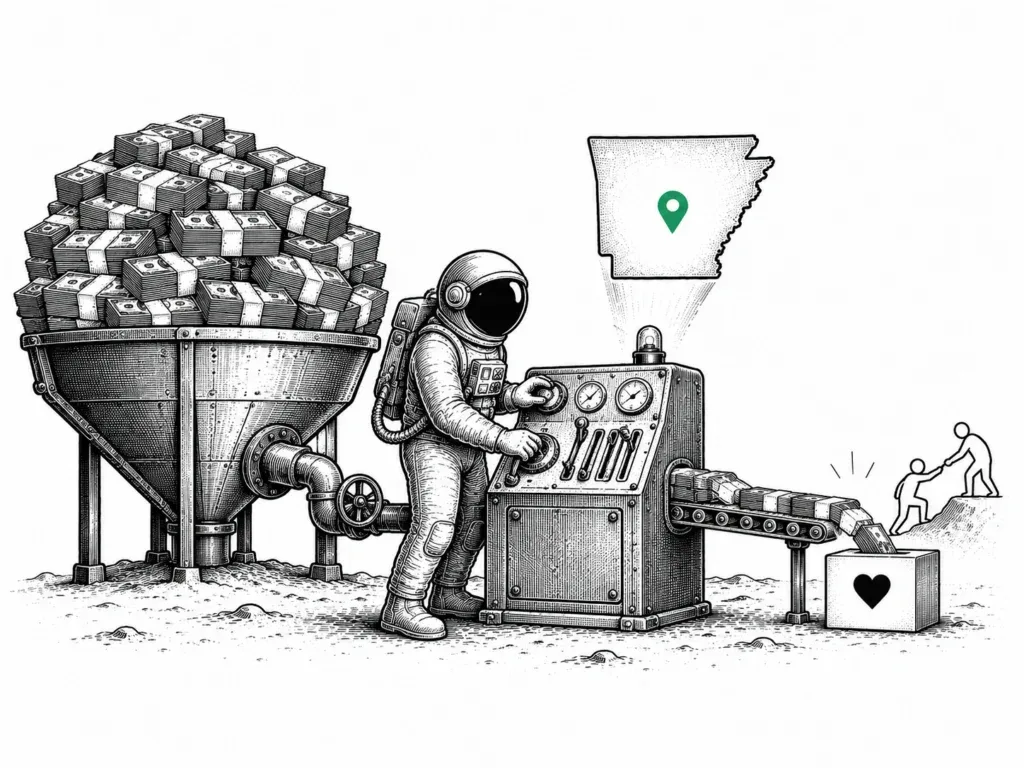
When you hire a digital marketing ad agency, you’re handing over your budget, your brand, and your growth trajectory. The agency is supposed to own the whole system: strategy, creative, media buying, analytics, and the ongoing work of making every dollar perform better than it did last month. That’s what the engagement is for. Measurable results. More qualified traffic, more leads, more revenue.
Most of those relationships look the same from the inside.
Most agencies operate as execution shops. They take a budget, allocate it across channels, report impressions and click-through rates, and call that strategy. The client gets activity. They may not get results. And they rarely get the foundational work that determines whether any of the tactical activity can succeed: audience clarity, competitive positioning, a defined conversion path, an honest read on where revenue actually comes from.
Most businesses and nonprofits we talk to are living in that gap without realizing it.
Jump to Section
- #why-do-most-digital-marketing-ad-agencies-stop-at-tactics
“>Why most agencies stop at tactics
- #how-does-the-vsta-framework-change-what-you-get-from-an-agency
“>How the VSTA framework changes what you get
- #what-questions-should-you-ask-before-hiring-a-digital-marketing-ad-agency
“>Questions to ask before you sign
- #what-a-real-growth-partner-looks-like
“>What a real growth partner looks like
What Does a Digital Marketing Ad Agency Actually Do?
A digital marketing ad agency builds and manages the systems that connect an organization to the people it’s trying to reach online. That means paid search (pay-per-click, or PPC), paid social, search engine optimization (SEO), content, email, creative production, and the strategy that determines how those channels work together.
But that list is where most agencies stop.
Walk through the website of any top-ranking competitor in this space and you’ll see the same structure: a services menu organized by channel. Social Media. Google Ads. SEO. Email. TikTok. Meta. The implicit pitch is: we run these things, you pay us, results follow. It’s a vendor model dressed up in marketing language.
The channel list is not the agency’s value. The channel list is the menu. The value is in knowing what to order, in what sequence, for what organization, at what stage of growth.
A real digital marketing ad agency operates upstream of the channels. It asks what the organization is trying to accomplish, what the competitive landscape looks like, where current demand is already showing up, and what the conversion path actually requires before a dollar goes into media. Execution without that foundation is not marketing strategy. It’s spending.
We see this pattern constantly. Most Businesses Don’t Need More Marketing. They Need a Strategy ” target=”_blank” rel=”noopener noreferrer”>Most organizations don’t need more marketing
The agencies that list channels first are telling you something. They’ve organized themselves around the deliverable, not the outcome. That’s a meaningful structural difference, and it shapes everything: how they onboard clients, how they define success, how they handle a campaign that isn’t working, and whether they ever tell you something you don’t want to hear.
A partner worth working with asks what you’re building before it asks what you want to spend. Most organizations haven’t actually encountered that version of this work yet, and that gap is exactly why the channel-first model keeps winning on search results while underdelivering in practice.
Why Do Most Digital Marketing Ad Agencies Stop at Tactics?
Because the agency business model rewards activity, not outcomes. Agencies bill for deliverables. The more channels they manage, the more they invoice. Strategy, by contrast, is hard to package and even harder to price.
That’s not cynicism. It’s structure.
When an agency builds its sales pitch around channels (Google Ads, Meta, SEO, email, creative), it wins clients faster. The proposal is concrete: "We’ll run 3 campaigns per month and manage your ad spend." A business owner or an executive director can see that. They can compare it to the next agency’s proposal. It looks like a plan.
What it rarely looks like is a strategy.
Browse the websites of the agencies ranking for "digital marketing ad agency" and you’ll find the same menu repeated: Social Media. Search. Paid Media. Creative. CRO. Each channel listed as a service line, each one priced separately. Channel menus win deals. Strategy frameworks require a longer conversation and a client willing to slow down before spending.
Clients aren’t ready for that conversation. And agencies have stopped trying to start it.
SparkToro’s
” target=”_blank” rel=”noopener noreferrer”>State of Digital Agencies 2024
A buyer shopping for a digital marketing ad agency will hear a lot about what agencies can do. They’ll hear "we’ll manage your Google Ads" and "we’ll handle your content calendar." The question they almost never hear: "What does growth actually mean for your organization right now?"
That missing question is Strategy vs. Tactics: What Every Business Owner Needs to Know ” target=”_blank” rel=”noopener noreferrer”>the difference between strategy and tactics
The cost of skipping that question compounds fast. Budget flows into channels that aren’t connected to a goal. Reporting covers impressions and reach instead of revenue, donations, and retention. Paid, content, and SEO run in parallel without a shared story. No strategy. No system. Just spend.
The buyer eventually realizes something is off. The campaigns are running, the reports arrive, but nothing is moving. That frustration is common, and it’s not the result of bad execution. It’s the result of executing on the wrong frame from the start.
Channels get chosen before the problem is defined. Tactics ship before strategy exists.
The agencies that get it right do a few things noticeably differently.
What Should a Real Digital Marketing Ad Agency Build for You?
A real digital marketing ad agency builds a client acquisition system, not just a reporting cadence. The distinction matters more than it sounds, because one of those things scales and the other just describes what happened.
Most agencies hand you a dashboard. Impressions, clicks, cost-per-click, maybe a conversion rate. That data isn’t useless, but it’s not an outcome. What they’re actually delivering is proof that they ran the campaign, not proof that your organization grew.
A genuine partner builds something different:
- A clear picture of who you’re trying to reach, why they should choose you, and what message will actually move them
- Content and demand generation coordinated across channels, not ads running in isolation from everything else
- Paid, organic, and owned media working together so each one builds on the others
- We’re also building a feedback loop that gets smarter with every cycle, not a monthly report that resets to zero
Pathfinder, iProv’s first-party attribution platform, connects each conversion back to the specific ad that drove it. When a lead or a gift comes in, you know exactly which keyword, campaign, and channel made it happen. Not a modeled estimate. Not last-click attribution that hands credit to whatever someone clicked right before converting (while ignoring the six touches that actually moved them).
Running ads isn’t the goal. Building a growth engine is. When paid campaigns, SEO, content, and email are coordinated, you stop bleeding budget on attention that doesn’t stick and start Stop Guessing. Start Growing: How to Build a Client Acquisition System That Actually Works ” target=”_blank” rel=”noopener noreferrer”>building a client acquisition system
VSTA is the structure iProv built to make sure none of those pieces get skipped.
How Does the VSTA Framework Change What You Get From an Agency?
The VSTA framework (Vision, Strategy, Tactics, Alignment) is the operating system iProv uses to turn a collection of marketing activities into a coherent growth effort. It’s what separates a strategic partner from a vendor running your Google Ads.
Vision, Strategy, Tactics, and Alignment each correspond to a distinct phase of building the system.
Vision comes first. Not "we want more leads," but: what does growth actually mean for this organization? By when, and connected to which revenue number? (For a nonprofit, the same question points at donations, recurring gifts, volunteer hours, or program reach instead of revenue.) Agencies that skip this step will optimize your campaigns and miss your organization entirely.
Strategy follows from that vision. Given where you want to go, where should you compete, which audiences carry the highest potential, and what message positions you against real alternatives? Strategy narrows the field so effort doesn’t scatter across a dozen half-bets.
Tactics only arrive once strategy is clear: which ads to run, what content to create, which keywords to target, and which Ways of Advertising That Actually Work: Why Most Fail and What to Do Instead ” target=”_blank” rel=”noopener noreferrer”>ways of advertising that actually work
Alignment is the layer most agencies skip. Your team, your content, your paid campaigns, your sales or development process: are they all pointing at the same goal? Without it, even technically excellent tactics produce noise. One team generates awareness while another chases a different persona, and nothing accumulates.
Look at how Apple or Starbucks shows up in the world. Their campaigns don’t feel like separate ads someone assembled in a quarterly planning meeting. They feel like one continuous story. That doesn’t happen because they found better ad formats. It happens because someone decided on the strategy before anyone touched a tactic.
The
” target=”_blank” rel=”noopener noreferrer”>VSTA framework
What Should a Nonprofit Expect From a Digital Marketing Ad Agency?
Everything above applies to nonprofits. The gap between a vendor and a partner is just wider, and more expensive to get wrong, because a nonprofit’s version of the problem has moving parts a for-profit funnel doesn’t have. Run the standard channel-first playbook on a mission-driven organization and you don’t just underdeliver. You misread what the organization is actually trying to do.
You have three audiences, and your agency has to hold all of them
A business has one primary audience: people who might buy. A nonprofit is working three at once. Donors who give money, volunteers who give time, and the people the organization actually serves. Those groups want different things from the same channels, and content built for one can quietly damage trust with another. An agency that treats your donation page like a checkout and calls it strategy has flattened your mission into a single funnel. A real partner names, in the Strategy phase, which audience each campaign is for and what action it’s meant to create. If a prospective agency can’t articulate the difference between donor content and beneficiary content, they’ll produce work that chases one group while eroding another.
"Growth" for you is a mission outcome, not a revenue number
This is where the Vision phase earns its keep. For a business, growth eventually reduces to revenue. For a nonprofit, it’s donations, recurring gifts, volunteer hours, program reach, and the community trust that makes all of it possible. A partner worth hiring defines your Vision in those terms and connects it to the numbers your board and your funders already track. One that reskins a generic lead-gen goal and hopes it maps onto your mission is optimizing for the close, not for you.
Your reporting has to survive a board meeting
Nonprofit boards are fiduciaries. Marketing spend carries scrutiny a for-profit budget never faces, and that changes what "good reporting" means. A dashboard of impressions and reach is worse than useless in a board setting; it invites exactly the question the agency can’t answer. You need reporting that translates into plain language for a volunteer board, and sometimes into the language a grant funder expects. Ask a prospective agency directly whether they can produce a report a board member with no marketing background can read and defend. If the answer is "we’ll give you access to the dashboard," keep looking.
A real partner knows the Google Ad Grant cold
Eligible nonprofits can receive up to $10,000 per month in free Google Search advertising through the
” target=”_blank” rel=”noopener noreferrer”>Google Ad Grants program
How an agency handles nonprofit pricing tells you how it thinks
Many agencies offer reduced rates or pro bono engagements for mission-driven organizations. How a firm responds when you raise it is a fast read on whether they understand the sector or just see another retainer. Cheapest doesn’t win. What you’re looking for is a partner who gets that every dollar you spend on marketing is a dollar not spent on the mission, and who can defend the spend on exactly those terms.
What Questions Should You Ask Before Hiring a Digital Marketing Ad Agency?
Good questions cut through the sales pitch faster than any reference check. Ask them before you’re deep into proposals, and watch how the agency handles them, not just what they say.
If you haven’t already, What a Marketing Consultant Helps You Fix Before You Waste More Budget ” target=”_blank” rel=”noopener noreferrer”>read up on what a marketing consultant should fix
Start with these:
How do you start? Do you begin with an audit, a strategy session, or a proposal for services? Watch the starting move. A proposal on day one means they’re selling. An audit or strategy session means they’re actually trying to understand your situation first. That difference in approach tends to hold throughout the relationship.
How will you measure success, and what metrics won’t you report on? The second half is the one that matters. Any agency can hand you a dashboard. The partners worth working with will name the metrics they don’t use, and they’ll explain why, because they understand that impressions and click volume don’t tell you whether you’re actually growing.
What happens if a channel isn’t working? What’s the escalation process? You want a clear answer here: who notices, who decides, what changes, and on what timeline. Agencies without a defined process respond to underperformance by waiting, or by selling you a new channel.
How do paid, organic, and content work together in your approach? If the answer treats these as three separate service lines, that’s your signal to keep looking. A strategy-first partner describes a connected system: paid campaigns surfacing the search terms worth going after organically, content doing conversion work at each stage of the funnel rather than just filling a blog. The channels should be in conversation with each other.
If we’re a nonprofit: what will you hold yourself accountable for in 90 days, and can you report it to our board? Same tell as everywhere else, higher stakes. If the answer is impressions, reach, or follower growth, that’s the wrong partner. If it’s donations, volunteer sign-ups, or email list growth with tracking in place, and they can put it in language a fiduciary board will follow, keep the conversation going.
Can you show us how you’ve adapted strategy for a client when the market shifted? You’re not fishing for a highlight reel story. You’re trying to find out if they actually pay attention. Agencies that are good at this can point to a specific moment: a channel that stopped performing, a message that went flat, a competitor move that changed the game. They noticed, they adjusted, and they can tell you what they changed and why. Agencies running on autopilot can’t answer this cleanly. The retainer gets paid either way, so the incentive to notice isn’t always there.
A real digital marketing ad agency welcomes these questions. A tactics shop gets defensive. That reaction is data.
Before you sign anything, How to Hire a Small Business Digital Marketing Agency Without Wasting Your Budget ” target=”_blank” rel=”noopener noreferrer”>this guide on hiring a digital marketing agency
Questions We Hear Before Business Owners Sign With an Agency
Most of the questions below come up in the final week before an owner or an executive director decides to move forward with an agency.
What’s the difference between a digital marketing agency and a digital marketing ad agency?
The "ad" label signals a heavier emphasis on paid channels: PPC, paid social, programmatic display. Some partners go the opposite direction and focus purely on organic growth through SEO and content. We’ve found that the strongest engagements treat paid and organic as one system, not two separate budgets. They reinforce each other. An agency that silos them is leaving performance on the table.
How much does a digital marketing ad agency typically cost?
Pricing structures vary: retainers, project fees, performance splits. Here’s the thing, though. The number itself tells you surprisingly little. What you’re actually evaluating is what the engagement covers and how the partner defines success for your specific situation. An agency that charges for strategy upfront before running a single ad is usually far better aligned with your outcomes than one handing out free audits to get in the door. The free audit is a sales tool. The paid strategy session is the work.
How long does it take to see results from a digital marketing ad agency?
Paid channels can generate actionable data fast. Three weeks in, you’ll have enough signal to start making real optimization decisions. But consistent demand, a compounding brand presence, a cost-per-acquisition that actually declines over time: that’s a three-to-six month build, at minimum. We’ve seen it take longer when the foundation isn’t right coming in. Any partner promising fast results before they understand your audience and competitive position is optimizing for the close.
Does a nonprofit need a different kind of agency?
Not a different kind. The same discipline, applied to a harder problem. Any agency worth hiring leads with strategy before channels, whether the client sells software or feeds families. What a nonprofit should insist on is a partner who can hold three audiences in view at once, define success as mission outcomes rather than revenue, report in a way a fiduciary board can act on, and actually knows how to run and protect a Google Ad Grant. If an agency treats your organization like a business with a donate button bolted on, that’s your signal to keep looking.
Do I need a digital marketing ad agency, or could I handle this in-house?
Depends on your team’s capacity and where you are in your growth stage. In-house teams can execute well when they have clear strategic direction. What most struggle with is the alignment layer: knowing not just how to run a channel, but why that channel, in what sequence, toward what goal. That’s the piece a strategy-first partner is built to own.
What a Real Growth Partner Looks Like
The right digital marketing ad agency earns its place before any ad ever runs. Clarity comes first: who you’re trying to reach, what they need to hear, and which channels are actually worth your budget. The channels and tactics follow from that. When agencies skip to the ads, you can usually tell.
That’s the logic behind the
” target=”_blank” rel=”noopener noreferrer”>VSTA framework
We talk to a lot of business owners and nonprofit leaders who’ve already been through one or two agency relationships that didn’t pan out. If that’s where you are, we’ll tell you plainly whether what we do is actually a fit for your situation. No sales deck, no pitch, no pressure.
Don't Just Read About It
Ready to Move Your Mission Forward?